Every year, the Thanksgiving table is the last thing I finish and the first thing everyone notices. The turkey gets the glory, but it is the centerpiece that makes people stop at the doorway and say, “Oh, this looks lovely.” I have learned over many Thanksgivings that a good centerpiece does not need to be expensive or elaborate. It needs to feel like harvest time: warm colors, things from the garden and the yard, and a little candlelight.
These Thanksgiving centerpiece ideas come straight from our own farmhouse table. Some use pumpkins we grew ourselves, some use branches cut from the yard, and all of them can be put together in an afternoon. Nothing here blocks anyone’s view across the table, and nothing here costs more than a few dollars — most of it costs nothing at all.
Start With What the Garden Gave You
The easiest centerpiece I know starts in the garden, not the store. A few small pumpkins, a handful of gourds, some dried corn, and a scattering of autumn leaves will carry a whole table. I set a wooden cutting board or a long tray down the middle of the table first, because it corrals everything and makes cleanup as simple as lifting the tray away.
Arrange the pumpkins in a loose line, mixing sizes and colors — a big orange one in the middle, smaller white and green ones tucked around it. Tuck dried leaves, pinecones, and a few sprigs of rosemary or sage between them. The herbs are a quiet trick: they look beautiful, and every time someone reaches for the bread, they catch a little fragrance.
If you grew pumpkins this year, this is their moment to shine. Our fall pumpkin baking recipes covers what to do with the insides once the decorating is done, so nothing goes to waste. A pumpkin that decorated the table on Thursday can become pie on Friday, and that is the homestead way.
The Pumpkin and Candle Classic
If there is one centerpiece I come back to year after year, it is pumpkins and candles. Hollow out a medium pumpkin, set a jar candle or a pillar candle inside, and surround it with smaller pumpkins and leaves. The glow through the pumpkin’s skin is warm and soft, and it looks far fancier than the ten minutes it took.
Safety first, as always with open flames near dried leaves. Keep the candle inside glass, keep dried leaves a few inches away from the flame, and never leave candles burning in an empty room. Battery-operated pillar candles give nearly the same glow and let you relax completely, which is worth a lot on a day when the oven is already working hard.
For a longer table, repeat the idea down the line: three hollowed pumpkins of different heights, each with a candle, spaced along a greenery runner. It reads as one long, intentional centerpiece instead of three separate ones, and it photographs beautifully when everyone sits down.
A Low Arrangement That Lets People Talk
The number one rule of Thanksgiving centerpieces is height. A tall arrangement looks grand in a photo, but at a real dinner it means Grandma is talking to a bouquet instead of her grandchildren. Keep everything under about twelve inches tall so every face is visible across the table.
My favorite low arrangement is a shallow wooden bowl or a dough bowl filled with small pumpkins, pinecones, dried orange slices, and a few sprigs of eucalyptus or cedar. Everything sits low, nothing wobbles, and it takes five minutes to assemble. If you want a little more height without blocking views, use a cake stand: it lifts the arrangement just enough to feel special while staying well below eye level.
Another low option is a simple garland runner. Lay a faux or fresh greenery garland down the center of the table, weave in a few small pumpkins, pinecones, and battery tea lights, and you are done. The garland does the work of looking full, and you can push serving dishes right up alongside it.
Bring the Outdoors In
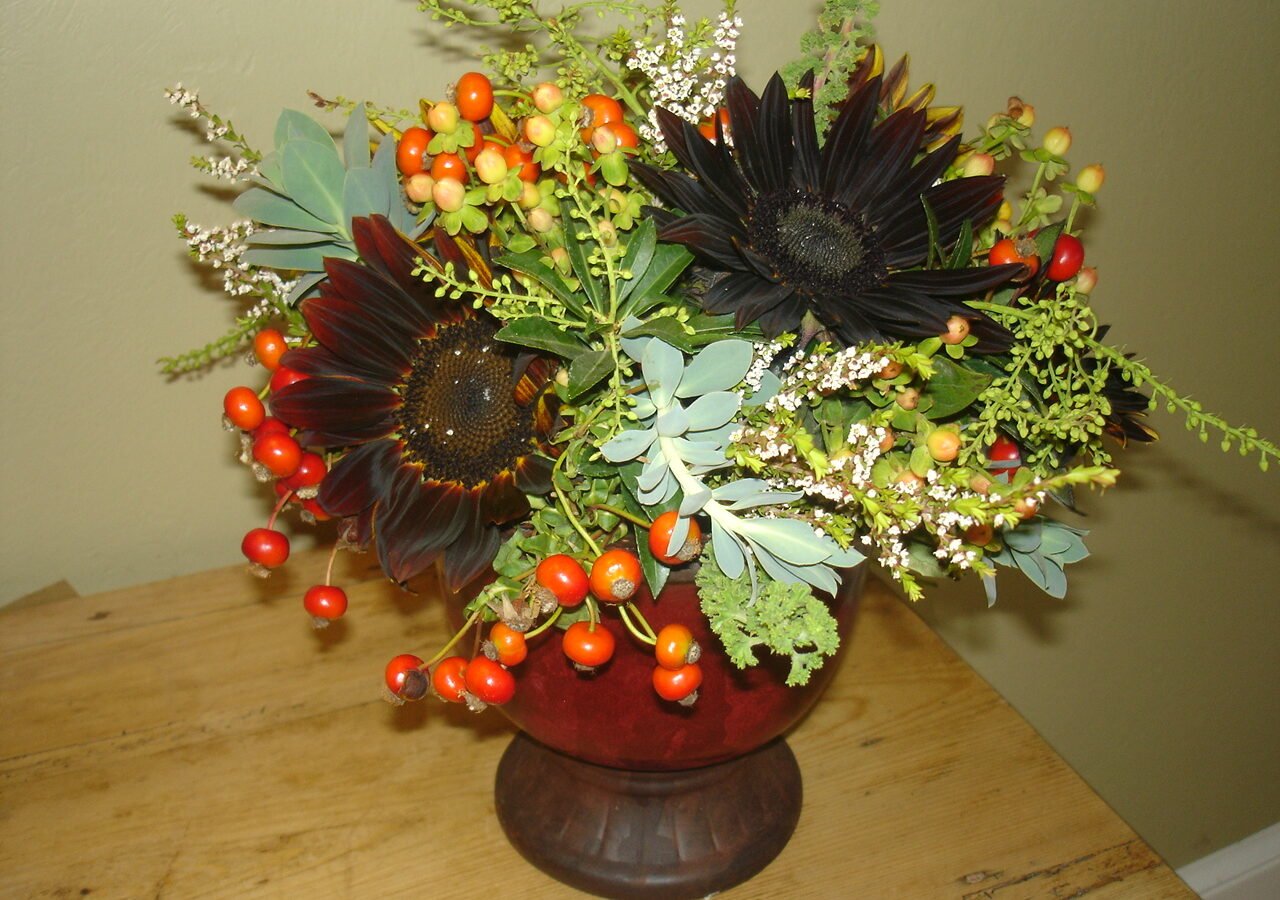
Some of my favorite centerpieces cost exactly nothing because they came from a walk around the property. A bundle of dried grasses tied with twine, a branch of colorful maple leaves in a mason jar, a few interesting seed heads from the garden — nature does the decorating better than any store.
One year, the kids and I gathered pinecones, acorns, and pretty leaves the week before Thanksgiving, and we scattered them down the table with a few candles between. Guests kept picking up the pinecones and commenting on them. It was the simplest centerpiece I ever made, and people remember it more than any store-bought arrangement.
If you have a garden still giving in November, use it. A few sprigs of rosemary, thyme, or sage from the herb bed, some dried flowers saved from summer, or a small basket of apples from the orchard all belong on a Thanksgiving table. Our plant garlic fall guide is the job that usually has me out in the garden the same week I am gathering centerpiece material, and the two tasks pair nicely.
A Centerpiece That Doubles as Dessert Display
Here is a trick I love: make the centerpiece edible. A cake stand piled with small pumpkins and a few baked treats, a wooden board holding a loaf of bread and a jar of jam, or a cluster of mini pies surrounded by leaves — the centerpiece becomes part of the meal, and guests love it.
Our no knead farmhouse bread is the loaf I bake the morning of Thanksgiving, and it looks so good on the table that it often serves as half the centerpiece before it is sliced. Set it on a board with a few small pumpkins and a sprig of rosemary, and you have a centerpiece that smells as good as it looks.
For a dessert table, the same idea works even better. A tiered stand with cookies, a small pumpkin pie, and a scattering of leaves is both decoration and invitation. People graze, they compliment the display, and nobody has to ask where dessert is.
Color Palettes That Always Work
If choosing colors feels hard, pick one of these three palettes and stick to it. First, classic harvest: orange pumpkins, deep red leaves, cream candles, and gold accents. It is traditional for a reason and photographs warmly. Second, woodland neutrals: white pumpkins, pinecones, burlap, and greenery. This one suits a farmhouse table perfectly and feels calm rather than busy. Third, jewel tones: deep burgundy, plum, and gold, with dark greenery. It feels a little dressier and works beautifully for an evening meal.
Whatever palette you choose, repeat it at least three times on the table — in the centerpiece, the napkins, and one more spot, like the place cards or the candles. Repetition is what makes a table look planned rather than random. One orange thing looks like an accident; orange in three places looks like a design.
Kid-Friendly Centerpiece Jobs
If kids are coming to dinner, give them a centerpiece job. Little hands are wonderful at arranging pinecones, scattering leaves, and placing small pumpkins. One year, our youngest arranged the entire centerpiece by herself — slightly crooked, completely charming, and the thing everyone talked about all afternoon.
Paper turkeys, hand-traced leaves, and painted pinecones all make sweet additions to a family table. Keep anything breakable toward the center where small hands are less likely to reach, and let the kids’ contributions sit proudly alongside the grown-up candles. A table children helped decorate feels more like Thanksgiving than a perfect one ever will.
Setting It Up the Day Before
The best Thanksgiving table trick I know is to build the centerpiece the day before. With the centerpiece done, Thanksgiving morning is about cooking and family, not hunting for the good tray. Cover the finished table with a clean sheet if you are worried about dust, and pull it off before guests arrive.
While you are at it, leave room for the food. A centerpiece should be narrow — no more than about a third of the table’s width — so serving dishes fit comfortably alongside it. If the table is small, move drinks to a side table or the kitchen counter. Nobody enjoys a Thanksgiving dinner where there is no room for the mashed potatoes.
Your Turn
Pick one idea from this list and try it this year. Start with pumpkins and candles if you want the biggest change for the least effort, or the garden-gathered arrangement if you love the idea of a centerpiece that cost nothing. A Thanksgiving centerpiece does not need to be perfect — it needs to be warm, low enough to see across, and made of things that mean something to your home.
That is the whole secret, really. A few things from the garden, a little candlelight, and a table set for the people you love. Everything else is just garnish, and garnish is the fun part.