The day after Thanksgiving, my kitchen looks like a battlefield. The turkey carcass sits on a platter, picked mostly clean, surrounded by containers of stuffing and mashed potatoes and a cranberry sauce bowl with two spoonfuls left in it. For years I stared at that carcass and thought, “Well, that was a lot of work for one meal.”
Then my grandmother’s voice came back to me: the turkey is not done until the soup is made. And she was right. The second meal — the soup — is the one I look forward to almost as much as the feast itself. It is warm, it is simple, it costs almost nothing, and it stretches that beautiful bird into two more days of dinners.
Here is how we make turkey soup in our house, from the carcass to the bowl, with the shortcuts that keep it easy and the variations that keep it interesting.
Why Turkey Soup Is the Real Thanksgiving Tradition
Everyone talks about the turkey dinner. Nobody talks about the soup — and that is a shame, because the soup is where the real value lives.
It uses the whole bird. A Thanksgiving turkey is a big investment, and throwing away the carcass wastes the best part for soup: the bones, the skin, the bits of meat clinging to the frame. Simmered slowly, they make a broth that no carton from the store can match.
It is practically free. Once the feast is over, the main ingredient is something you were about to throw away. Add carrots, celery, onion, and noodles — all pantry staples — and you have dinner for a family of six for the price of a few vegetables.
It is the coziest meal of the week. The day after a holiday is slow and quiet. A pot of soup simmering on the stove, the house smelling like herbs and broth, is exactly the right speed for the day after a feast.
It freezes beautifully. Make a double batch and freeze half. In January, when the weather turns cold and nobody wants to cook, you will open the freezer and thank your past self.
The Recipe
This makes a big pot — about twelve servings. It is meant to feed a crowd and leave leftovers.
For the broth:
- 1 turkey carcass, broken into pieces that fit your pot
- Any leftover turkey skin, bones, and drippings
- 12 cups cold water
- 2 onions, quartered (skins on is fine)
- 3 carrots, cut into chunks
- 3 celery stalks, cut into chunks
- 3 garlic cloves, smashed
- 2 bay leaves
- 1 teaspoon whole peppercorns
- A small bunch of fresh parsley stems (or a teaspoon of dried thyme)
For the soup:
- 2 to 3 cups leftover turkey meat, shredded or cubed
- 3 carrots, peeled and sliced into coins
- 3 celery stalks, sliced
- 1 onion, diced
- 2 cups egg noodles (or rice, or small pasta)
- Salt and black pepper to taste
- Fresh parsley, chopped, for serving
Step 1: Start the broth. Put the carcass pieces in your largest stockpot and cover with the cold water. Add the quartered onions, chunked carrots and celery, garlic, bay leaves, peppercorns, and parsley stems. Bring it to a gentle simmer over medium heat — not a rolling boil, which makes the broth cloudy.
Step 2: Simmer low and slow. Skim off any foam that rises to the surface in the first twenty minutes. Then turn the heat down to the lowest simmer, put the lid on slightly ajar, and let it go for two to three hours. The longer it simmers, the richer the broth. If you have a slow cooker, this is the perfect job for it — and if you want more slow-cooker inspiration, my crockpot chicken recipes fall guide has the same set-it-and-forget-it spirit.
Step 3: Strain the broth. Lift out the big bones with tongs, then pour the broth through a fine strainer or a colander lined with cheesecloth into a clean pot or a large bowl. Pick through the solids and rescue any good meat — there is usually a surprising amount hiding on the frame. Discard the spent vegetables and bones.
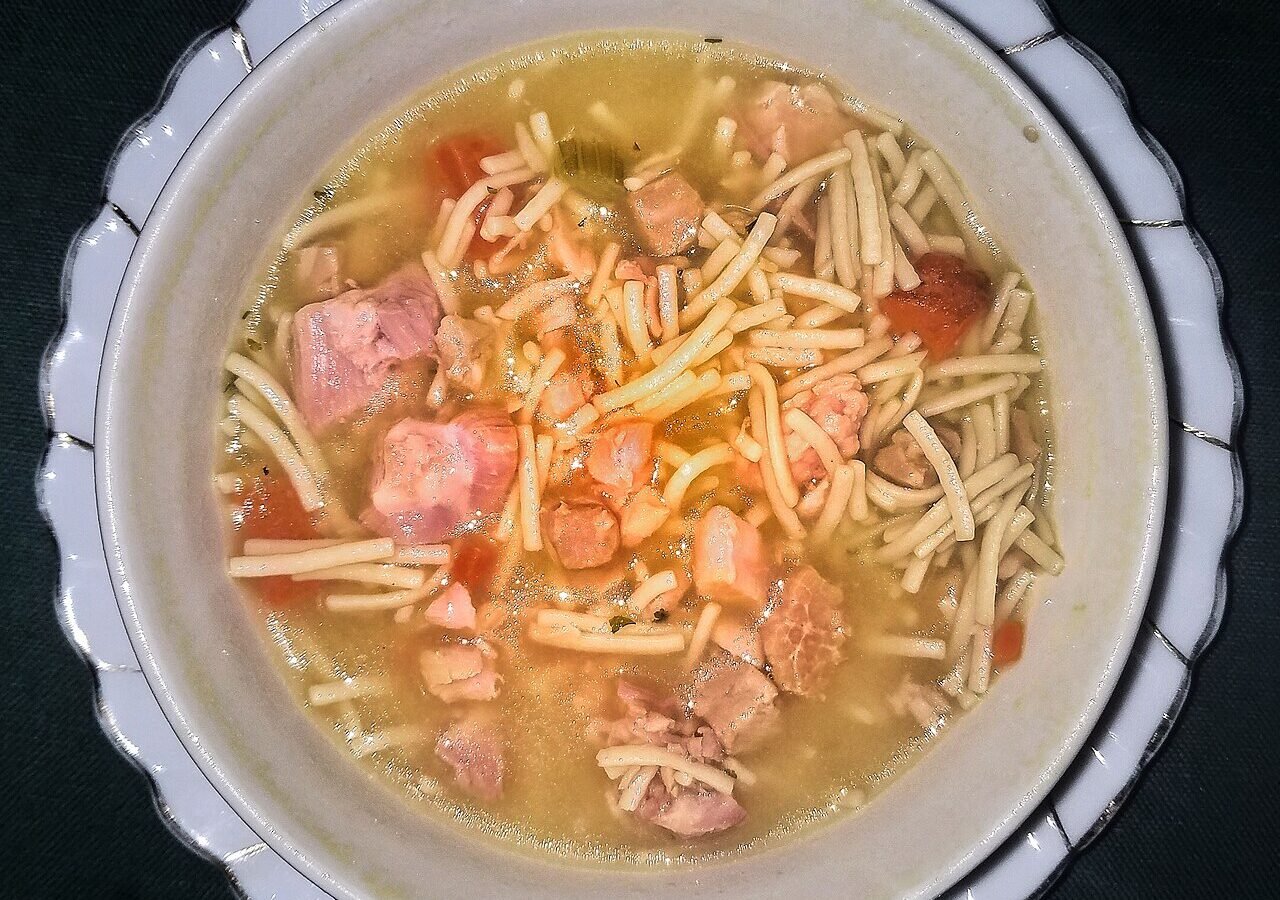
Step 4: Build the soup. Bring the strained broth back to a simmer. Add the diced onion, sliced carrots, and sliced celery, and cook for ten minutes until they are just starting to soften. Add the noodles and cook until tender — usually six to eight minutes.
Step 5: Add the turkey. Stir in the shredded leftover turkey and cook for two or three more minutes, just until it is heated through. Overcooking the turkey makes it dry and stringy, so this step is quick on purpose. Taste the soup and season generously with salt and pepper. A squeeze of lemon at the end brightens the whole pot.
Step 6: Serve. Ladle it into big bowls, top with chopped fresh parsley, and serve with crusty bread or crackers. My no knead farmhouse bread recipe is the perfect partner — a warm slice for dunking is non-negotiable in our house.
📌 Pin this: Start the broth with cold water and keep it at a bare simmer, never a hard boil. Cold water and gentle heat are what make a clear, golden broth instead of a cloudy one.
The Broth Is Everything
A good turkey soup is really a good turkey broth with things floating in it. If the broth is thin and tired, no amount of noodles will save it. Here is what makes the difference.
Use the carcass, not just the meat. The bones are where the flavor and body live. If your carcass is already picked clean, add the wing tips and the neck if you saved them, or a couple of turkey wings from the store. More bones means more flavor.
Simmer, do not boil. A rolling boil churns the fat and the proteins into the broth and turns it cloudy and greasy. A bare simmer — a bubble or two breaking the surface every few seconds — keeps it clear and clean-tasting.
Season at the end. Salt added at the start concentrates as the broth reduces, and you can easily overshoot. Wait until the soup is built, then season in stages and taste as you go. The same rule applies to my homemade chicken stock — the stock is the foundation, and the seasoning comes last.
Skim the foam. In the first twenty minutes, a grey foam rises to the surface. Skim it off with a spoon. It is just protein, and it is harmless, but removing it keeps the broth clear and sweet-tasting.
Make-Ahead and Storage
Turkey soup is a planner’s dream, because every part of it keeps well.
Make the broth ahead. The strained broth keeps for four to five days in the refrigerator, or three months in the freezer. I freeze it in quart containers and in ice cube trays — the cubes are perfect for deglazing a pan or enriching a sauce later.
Make the whole soup ahead. The finished soup keeps for three to four days in the refrigerator. If you plan to freeze it, leave the noodles out — they go mushy in the freezer. Freeze the soup without noodles, then add fresh noodles when you reheat it.
Reheating: Warm it gently on the stove over medium heat. If the noodles have soaked up too much broth overnight, add a cup of water or extra broth and adjust the seasoning. Soup always needs a little more salt the second day.
Variations Worth Trying
Once you have the basic soup down, it is endlessly adaptable.
Turkey and wild rice soup: Swap the noodles for a cup of wild rice blend. Add it with the vegetables and simmer for forty minutes instead of ten. It is heartier, nuttier, and very filling on a cold night.
Creamy turkey soup: Stir in a cup of heavy cream and a tablespoon of flour whisked into a little cold milk at the end. It turns the clear broth into a velvety, comforting bowl — especially good with a handful of frozen peas stirred in.
Turkey tortilla soup: Add a can of diced tomatoes, a can of black beans, a teaspoon of cumin, and a diced jalapeño. Serve with crushed tortilla chips, shredded cheese, and a dollop of sour cream. It is a completely different meal from the same leftovers.
Turkey and dumplings: Instead of noodles, drop spoonfuls of biscuit dough on top of the simmering soup, cover, and cook for fifteen minutes. The dumplings steam into fluffy clouds, and the soup underneath gets even richer.
Asian-style turkey soup: Add a knob of sliced ginger, a splash of soy sauce, and a drizzle of sesame oil to the broth. Stir in rice noodles and top with sliced green onions and a soft-boiled egg. It is the version I make when the family is tired of traditional flavors.
Common Mistakes (and How to Fix Them)
Mistake #1: Boiling the broth hard. A hard boil makes cloudy, greasy broth. Keep it at the gentlest simmer you can manage — if it is bubbling hard, turn it down.
Mistake #2: Overcooking the turkey meat. The meat is already cooked. It only needs two or three minutes in the hot soup to warm through. Any longer and it turns dry and stringy.
Mistake #3: Adding noodles too early. Noodles cooked in the soup from the start turn to mush and drink up all the broth. Add them in the last eight minutes, and if you are freezing the soup, leave them out entirely.
Mistake #4: Under-seasoning. Turkey broth is mild by nature. Taste the finished soup and season boldly — it usually needs more salt than you think, and a squeeze of lemon wakes up flavors that salt alone cannot reach.
Mistake #5: Throwing away the good bits. Before you discard the strained solids, pick through them. The meat hiding along the backbone and in the wing joints is often the best-tasting meat in the whole bird.
📌 Pin this: Freeze the broth in quart containers AND in ice cube trays. The quarts are future soup; the cubes are flavor for everything from gravy to rice for months.
Serving Ideas
The soup is simple, but the way you serve it changes how it feels.
The bread bowl night: Hollow out round loaves of crusty bread, ladle the soup in, and serve it with the bread tops on the side for dipping. It is messy and wonderful, and the kids will remember it forever.
The soup-and-sandwich supper: A bowl of turkey soup with a grilled cheese sandwich is the coziest supper in the world. Use the leftover cranberry sauce as a spread on the sandwich — sweet, tart, and perfect with the salty cheese.
The freezer gift: Pack a quart of the finished soup (no noodles) in a freezer container, tie it with twine, and give it to a neighbor or a new parent. It is the kind of gift that gets remembered long after the holidays.
The potluck contribution: Bring the soup to a post-holiday gathering in a slow cooker set to warm. It is the dish that makes you the hero of the leftovers party, and it costs almost nothing to make.
FAQ: Turkey Soup
Can I use a chicken carcass instead?
Absolutely. The recipe works exactly the same way with a chicken carcass, a rotisserie chicken frame, or even just turkey wings. The method is the same — only the bird changes.
How long should I simmer the broth?
Two to three hours is the sweet spot. Less than that and the broth is thin; more than four hours and the flavor starts to turn muddy. If you are using a slow cooker, four to six hours on low is perfect.
Can I make this without a carcass?
Yes. Use two to three pounds of turkey wings or drumsticks, or start with a good store-bought stock and add the leftover turkey meat, vegetables, and noodles. The carcass version is richer, but the shortcut version is still a very good soup.
My broth is cloudy. What went wrong?
It boiled too hard, or it was not skimmed. Cloudy broth still tastes fine — it just looks less pretty. Next time, keep the heat lower and skim the foam in the first twenty minutes.
Can I freeze turkey soup?
Yes, for up to three months. Freeze it without noodles, then add fresh noodles when you reheat it. Thaw overnight in the refrigerator and warm gently on the stove.
What vegetables can I add?
Almost anything. Green beans, corn, peas, diced potatoes, and parsnips are all welcome. Add root vegetables with the carrots and celery, and quick-cooking ones like peas and corn in the last five minutes.
Conclusion
The turkey dinner gets the photographs and the praise. But the soup — the quiet pot simmering on the stove the day after, made from what was left — is the meal that actually carries the holiday forward. It feeds the family again, it warms the house, and it turns one expensive bird into three days of dinners.
Your action step this week: When you carve the turkey, save the carcass in a bag in the refrigerator instead of throwing it away. The morning after Thanksgiving, put it in a pot with water and vegetables before you do anything else. By lunchtime, you will have the best soup of the year — and a whole new reason to be grateful for the bird.