There is a particular kind of cold that changes how a house cooks. It is not the crisp, pretty cold of the first frost. It is the deep, damp cold that settles into the bones in January, the kind where the wind finds every crack in the old windows and the chickens huddle in the coop like grumpy little feathered loaves.
That is when our kitchen changes. The salads disappear. The quick summer suppers disappear. Out come the heavy pot, the slow cooker, and the cast iron skillet, and they do not go back into the cupboard until spring.
These are the cold weather recipes we actually cook, year after year, in our farmhouse. Not fancy food. Not food that needs a special trip to a specialty store. Just warm, filling, honest food that makes a cold house feel like home again.
Why Cold Weather Cooking Is Different
Cold weather cooking is not just summer cooking with more butter, though I will not pretend butter is uninvolved. It is a different rhythm entirely.
In summer, I cook fast and light because the garden is giving and nobody wants to stand over a hot stove. In winter, the stove is the best seat in the house. A pot that simmers for three hours is not a chore — it is the heating system, the entertainment, and dinner all at once.
The rules I cook by in winter are simple. One: something should be simmering, braising, or baking for most of the afternoon. Two: dinner should be able to wait an extra half hour without suffering, because chores run long when the days are short. Three: there should be leftovers, because tomorrow’s lunch should be today’s dinner, reheated and somehow even better.
If a recipe cannot survive those three rules, it does not make the winter list.
1. The Beef Stew That Fixes Everything
If I could only keep one cold weather recipe, it would be beef stew. Not because it is impressive — it is not — but because it is the most forgiving, most reliable meal I know.
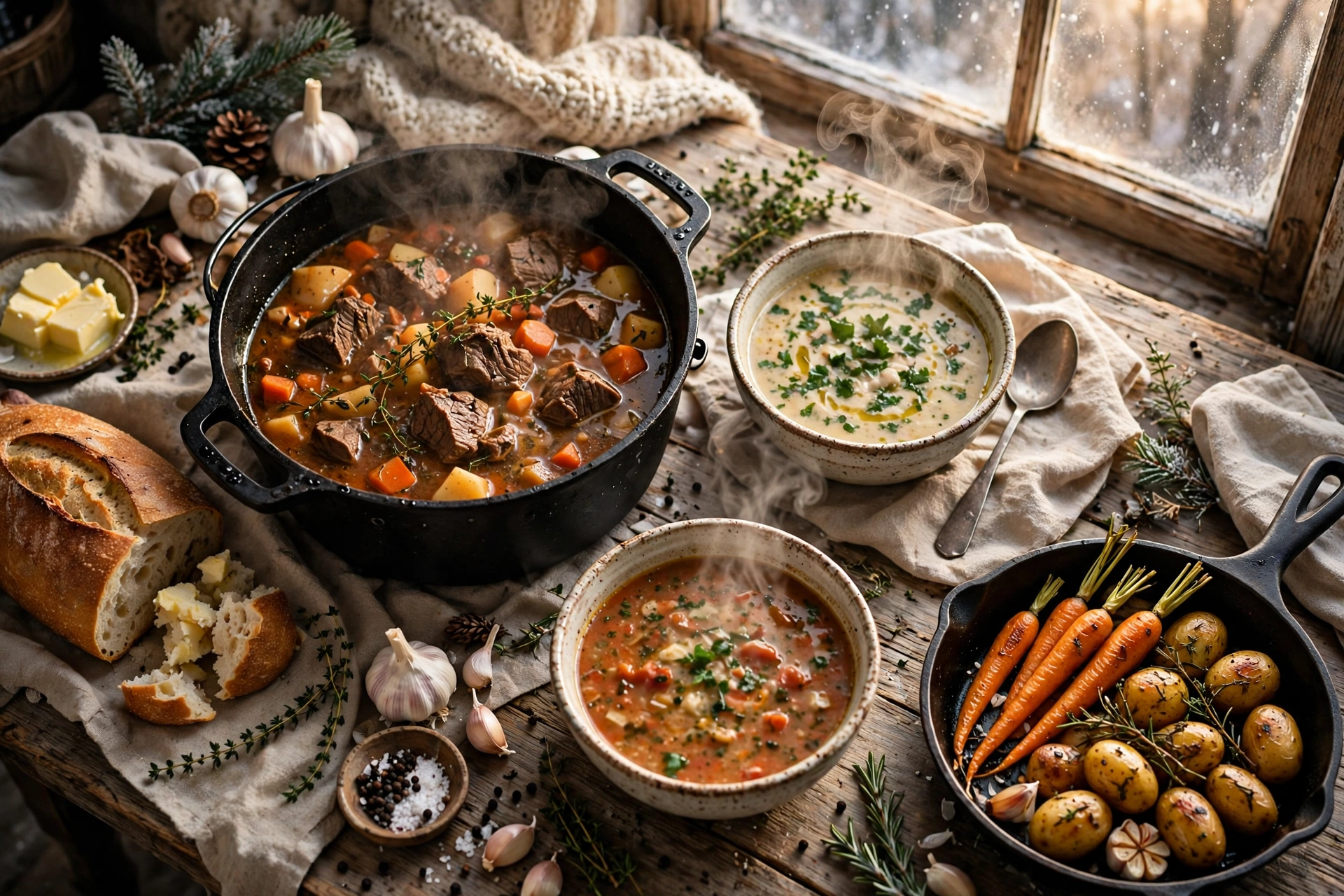
I brown chunks of beef in the heavy pot, not all at once (crowding the pot steams the meat instead of browning it, and browned meat is where the flavor lives). Then I soften onions, carrots, and celery in the same pot, scraping up all the browned bits with a splash of stock. Potatoes go in, along with a couple of bay leaves and a good pinch of thyme. Then the pot goes on low for two and a half to three hours, and I mostly leave it alone.
The mistake most people make with stew is rushing it. An hour is not enough. The meat needs time to go from tough to tender, and there is no shortcut that does not cost you flavor. If the stew tastes flat, it usually needs salt and time, in that order.
📌 Pin this: Stew tastes better on day two — the flavors marry overnight in the fridge. Make a double batch on Sunday and lunch is sorted until Wednesday.
Serve it with a loaf of no-knead farmhouse bread for dunking, and you have a meal that has ended more bad days in this house than I can count.
2. Chicken Soup From Real Stock
There is chicken soup, and then there is chicken soup made from stock you simmered yourself, and they are barely the same dish. Our homemade chicken stock is the base for half our winter cooking, and when someone in the house starts sniffling, the stockpot is the first thing that goes on the stove.
My version is simple: a whole chicken (or a pile of backs and necks saved in the freezer), carrots, onions, celery, a bay leaf, and water. Simmered low, never boiled hard, for three to four hours. The chicken meat gets picked off for soup, sandwiches, or pot pie, and the stock becomes the gold that everything else is built on.
Do not boil stock hard. A rolling boil makes it cloudy and greasy. You want the laziest simmer you can manage — a bubble breaking the surface every few seconds. That patience is the whole difference between good stock and great stock.
3. Slow Cooker Chicken and Dumplings
Some winter nights, I am out in the barn at five o’clock and dinner still needs to happen. That is what the slow cooker is for, and chicken and dumplings is its finest hour.
Chicken thighs (never breasts for the slow cooker — they dry out), carrots, celery, onion, and stock go in before lunch. By supper, the chicken falls apart with a fork. I stir in a simple dumpling dough dropped by spoonfuls on top, lid back on, and twenty minutes later dinner is done.
Our crockpot chicken recipes collection has more slow-cooker ideas in the same spirit — dinners that cook themselves while you do the real work of the day.
4. Chili, the Way We Actually Eat It
Every family has a chili opinion, and ours is that chili should be thick enough to stand a spoon in and flexible enough to feed whoever shows up. I make a big pot with ground beef (or venison when we have it), beans, tomatoes, onions, peppers, and a spice mix I measure with my heart rather than a spoon.
The secret to good chili is the same as stew: time. Two hours minimum. And it needs a rest — chili eaten straight off the stove is good, but chili that has sat for an hour, or overnight, is a different animal.
Toppings are a whole democracy in this house: shredded cheese, sour cream, diced onion, hot sauce, and cornbread for the purists. Nobody agrees on the perfect bowl, and that is half the fun.
5. Shepherd’s Pie From Sunday Leftovers
Shepherd’s pie is my favorite kind of cold weather recipe because it is really two meals in disguise. Sunday’s roast becomes Monday’s filling, and Monday’s filling under a blanket of mashed potatoes becomes a dinner that tastes like you cooked all day.
Brown the leftover meat with onions and carrots, add a splash of stock and a spoonful of tomato paste, and season it well. Spread it in a baking dish, top with mashed potatoes (real ones, with butter and a little cream), rough up the top with a fork so the ridges crisp, and bake until the edges bubble.
The fork-roughened top is not decoration. Those little ridges go golden and crunchy, and they are the best bites in the whole dish. Skip them and you miss the point.
6. Baked Pasta for a Crowd
When the house fills up — family visiting, neighbors snowed in, kids bringing friends home from the cold — I make baked pasta. A big tray of rigatoni or shells with sausage, tomatoes, and cheese feeds a crowd for less than almost anything else, and it reheats beautifully for days.
The trick is to undercook the pasta by a couple of minutes before it goes into the oven, because it keeps cooking in the sauce. Mushy baked pasta is a tragedy, and it is entirely preventable.
Serve it with a green salad if you are feeling virtuous, or do what we do and serve it with more bread. Winter is not the season for virtue.
7. Pot Roast, the Sunday Anchor
Sunday pot roast is less a recipe and more a ritual in our house. A chuck roast, seasoned generously, seared hard, then braised low and slow with carrots, potatoes, and onions until it surrenders completely.
I braise it in the oven at a low temperature rather than on the stovetop, because the oven heat is gentler and more even, and because it frees up the stovetop for everything else. Three to four hours, lid on, and the house smells like a promise.
Buy the chuck roast, not the pretty lean cut. The fat and connective tissue are what melt into richness over a long braise. A lean roast cooked this way just gets dry and sad, and no amount of gravy fully rescues it.
8. Potato Soup, Humble and Perfect
Potato soup does not photograph well and nobody brags about it at parties, which is exactly why I love it. It is cheap, it is easy, and on a night when the wind is howling and the pantry is looking thin, it is dinner.
Potatoes simmered in stock with onion and a little garlic, mashed roughly right in the pot (leave some chunks — texture is everything), finished with a pour of cream and a knob of butter. Bacon on top if you have it. Chives if you grew them. Cheese if the kids insist, which they do.
This is also the soup I make when someone is sick or tired or just having a hard week. It does not ask anything of you, and it gives a lot back.
9. One-Pan Sausage and Root Vegetables
Not every cold night allows a three-hour simmer. Some nights you have forty minutes and a sheet pan, and that is enough.
Sausages, chunked potatoes, carrots, parsnips, and onions tossed with oil and salt, roasted hot until everything is browned at the edges. It is the kind of dinner that looks like you tried harder than you did, and it uses whatever roots are still in the cellar or the crisper.
Cut the vegetables roughly the same size so they cook evenly, and do not crowd the pan — crowded vegetables steam instead of roast, and roasted edges are the entire point of this dinner.
Stocking the Cold Weather Pantry
Cold weather cooking is much easier when the pantry is ready before the first real cold snap. Here is what I keep on hand from November through March:
- Stock and broth: homemade frozen in quart containers, plus a few cartons for emergencies
- Dried beans and lentils: cheap, filling, and they keep forever
- Root vegetables: potatoes, carrots, onions, parsnips — the backbone of everything above
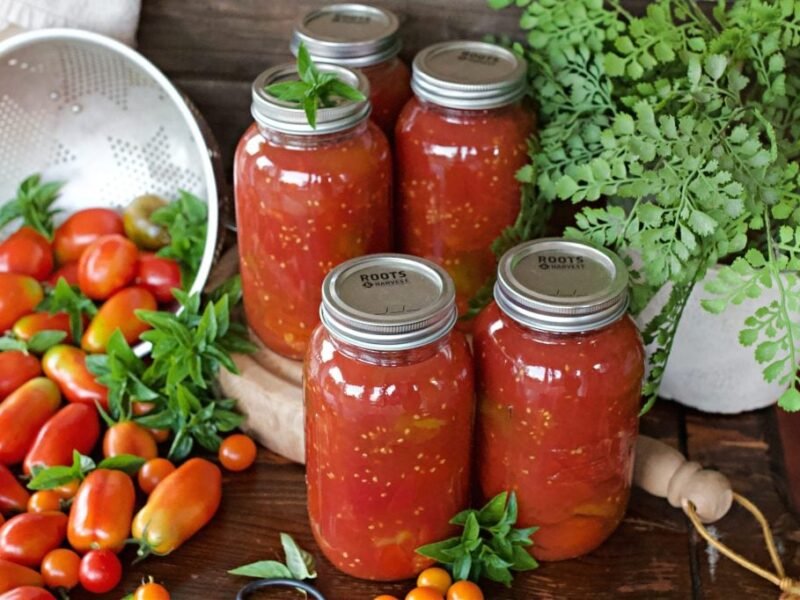
- Canned tomatoes: for chili, soup, and pasta all winter
- Rice, pasta, and oats: the bulk that turns a pot of something into a meal
- Butter, cream, and cheese: winter is not the time to run out
- Herbs and spices: bay leaves, thyme, rosemary, cumin, chili powder, and plenty of black pepper
With that shelf and a freezer full of stock, I can make dinner out of almost nothing on the worst night of the year.
The Rhythm That Makes It Work
Here is what winter cooking really looks like in our house, once you strip away the romance. On Sunday, I make stock or a big stew. Monday eats the leftovers. Tuesday is slow-cooker night. Wednesday is soup from whatever is left. Thursday is baked pasta or sausage and roots. Friday is whatever the week left behind, and Saturday we cook something new if we feel like it.
It is not glamorous. It is a system, and systems are what get dinner on the table when it is dark at five and cold all the way through.
📌 Pin this: Cook once, eat twice is the whole winter strategy — every stew, soup, and braise on this list tastes better reheated the next day.
Quick Recap
Cold weather recipes are not about showing off. They are about the pot that simmers all afternoon, the stew that tastes better tomorrow, and the soup that fixes a bad day. Start with beef stew, keep stock in the freezer, and let the slow cooker do the work on barn nights.
Stay warm, eat well, and save the salads for June.