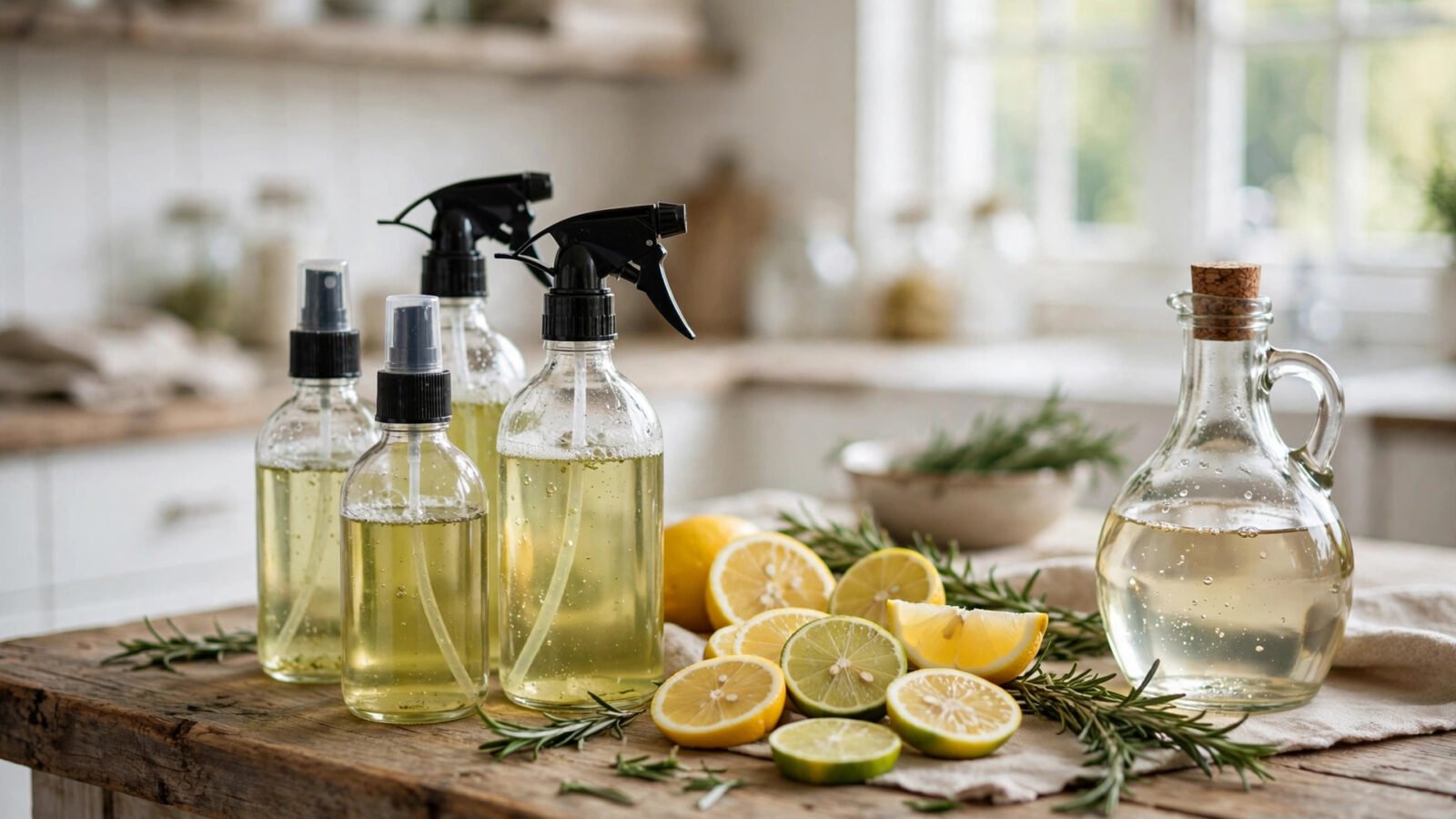
Open the cabinet under your sink. Count the bottles. The average American home has a dozen or more specialty cleaners — and most of them are doing jobs that three cheap pantry ingredients handle just as well.
Homemade cleaners aren’t about being crunchy or cute. They’re about math: a bottle of all-purpose spray costs $4–$6 at the store and about 25 cents to make. Multiply that across every spray, scrub, and soap in your house and you’re looking at $150–$250 a year back in your pocket — one more way the homestead mindset cuts the grocery bill (https://amesfamilyfarm.com/save-money-on-groceries-homestead/).
These 8 recipes are the ones we actually use, tested over years. No fluff, no 47-ingredient Pinterest potions.
The Pantry Cleaning Kit
Before the recipes, stock these five ingredients. Total cost: under $15, and they’ll make months of cleaners.
1. White distilled vinegar (1 gallon) — cuts grease, dissolves mineral deposits, deodorizes
2. Baking soda — gentle abrasive, deodorizer, scouring agent
3. Castile soap (like Dr. Bronner’s) — plant-based soap for everything
4. Washing soda (not baking soda!) — laundry booster and heavy-duty degreaser
5. Hydrogen peroxide (3%) — mild disinfectant and whitener
Optional but nice: a few essential oils (lemon, tea tree, lavender) for scent and a little extra antimicrobial power.
The 8 Recipes
1. All-Purpose Spray
The workhorse. Counters, sinks, stovetops, bathroom surfaces.
- 2 cups water
- 1 cup white vinegar
- 1 teaspoon castile soap
- 10–15 drops lemon essential oil (optional)
Mix in a spray bottle, shake gently. Cost: ~$0.25 per 24 oz vs. $4–$6 store-bought.
2. Streak-Free Glass Cleaner
- 2 cups water
- ½ cup white vinegar
- ¼ cup rubbing alcohol (70%)
- 1–2 drops dish soap (no more!)
Spray and wipe with newspaper or a microfiber cloth. The alcohol makes it evaporate fast — that’s the streak-free secret. Cost: ~$0.35 vs. $4+ for brand-name glass cleaner.
3. Soft Scrub for Tubs and Sinks
- ½ cup baking soda
- Enough castile soap to make a frosting-like paste (about 2–3 tablespoons)
- 5 drops tea tree oil (optional, for the bathroom)
Apply with a sponge, scrub, rinse. Lifts soap scum and ring-around-the-tub without scratching. Cost: ~$0.40 per batch vs. $5+ for commercial soft scrubs.
4. Powdered Laundry Detergent
- 1 cup washing soda
- 1 cup borax
- 1 bar castile or Fels-Naptha soap, finely grated
Mix well, store in a jar. Use 1–2 tablespoons per load. Makes about 60 loads. Cost: ~$0.08 per load vs. $0.20–$0.35 for store detergent. That’s $50–$100 a year for most families.
5. Toilet Bowl Cleaner
- ½ cup baking soda
- 10 drops tea tree or lemon essential oil
Sprinkle in the bowl, let sit 15 minutes, scrub, flush. For extra power, add ½ cup vinegar after the baking soda and let it fizz. Cost: ~$0.15 vs. $3–$5 per bottle.
6. Wood Floor Cleaner
- 1 gallon warm water
- ¼ cup white vinegar
- 1 tablespoon castile soap
- A few drops of lemon oil (optional)
Mop with a well-wrung mop — wood floors want damp, never soaking. Cost: ~$0.30 per gallon vs. $6–$9 for specialty wood floor cleaner.
7. Disinfecting Spray (Peroxide-Based)
- 3% hydrogen peroxide in a dark spray bottle (light breaks it down — that’s why it comes in a brown bottle)
Spray on cutting boards, doorknobs, and bathroom fixtures. Let sit 5–10 minutes, wipe. Vinegar doesn’t truly disinfect; peroxide does. Cost: ~$1 per bottle at any drugstore.
8. Air Freshener / Deodorizer Spray
- 1 cup water
- 2 tablespoons vodka or rubbing alcohol (helps scent disperse)
- 20–30 drops essential oil of choice
Shake and mist. Also great spritzed on upholstery and in the chicken coop entryway (not on the birds!). Cost: ~$0.50 vs. $4–$7 for plug-ins and sprays — and no synthetic fragrance headache.
Cost Comparison: DIY vs. Store-Bought
| Cleaner | Store price | DIY cost | Yearly savings* |
|—|—|—|—|
| All-purpose spray (monthly) | $5.00 | $0.25 | ~$57 |
| Glass cleaner (every 2 mo) | $4.50 | $0.35 | ~$25 |
| Bathroom scrub (monthly) | $5.50 | $0.40 | ~$61 |
| Laundry detergent | $0.28/load | $0.08/load | ~$60 |
| Toilet cleaner (every 2 mo) | $4.00 | $0.15 | ~$23 |
| Floor cleaner (every 2 mo) | $7.00 | $0.30 | ~$40 |
*Based on typical household usage. Total: roughly $265/year back in your pocket for about 20 minutes of mixing per month.
Safety Notes — Read These
Homemade doesn’t mean harmless. Respect the chemistry:
- NEVER mix vinegar and bleach. It creates toxic chlorine gas. This applies to store-bought bleach too — if you use bleach anywhere, keep vinegar far away from it.
- NEVER mix hydrogen peroxide and vinegar in the same bottle. Sprayed one after the other (with a wipe between) is fine and effective. Combined in one container, they form peracetic acid, which irritates skin, eyes, and lungs.
- Vinegar etches natural stone. Don’t use vinegar-based cleaners on marble, granite, or travertine — the acid dulls the finish. Use the castile-soap recipes on stone instead.
- Washing soda ≠ baking soda. They’re different chemicals. Washing soda is much more alkaline — wear gloves, and don’t substitute one for the other.
- Label everything. A spray bottle of clear liquid is a mystery. Label with the recipe name, date, and ingredients — especially with kids in the house.
- Essential oils and pets. Tea tree oil is toxic to cats and dogs in concentrated amounts. The tiny diluted quantities in cleaners are low-risk on surfaces, but skip it if your pets lick floors, or rinse after cleaning.
Common Mistakes
Using too much soap. More soap doesn’t mean more clean — it means residue. The recipes above are deliberately lean. If surfaces feel filmy, cut the soap in half.
Expecting suds. Commercial cleaners foam dramatically because of synthetic surfactants. DIY cleaners work without the bubble show. Judge by results, not foam.
Making huge batches. Most DIY cleaners (especially anything with castile soap) are best used within 1–3 months. Mix small, mix often.
Skipping the label. See safety notes. Future-you will not remember what’s in the mystery bottle.
FAQ
Do DIY cleaners actually disinfect?
Some do, some don’t. Hydrogen peroxide (3%) is a genuine disinfectant with EPA-recognized efficacy against common pathogens. Vinegar kills *some* germs but isn’t a registered disinfectant. For raw-meat cutting boards and illness cleanup, use the peroxide spray.
Will homemade laundry detergent work in HE washers?
Yes — this powder is naturally low-suds, which is exactly what HE machines need. Use 1 tablespoon for HE, 2 for standard top-loaders.
How long do homemade cleaners last?
Vinegar-based sprays: 3–6 months. Anything with castile soap: 1–3 months (soap can go rancid). Peroxide spray: keep it in the dark bottle and use within a month of opening for full strength.
Can I use apple cider vinegar instead of white?
For cleaning, stick with white distilled. ACV costs more and can leave a slight tint on light surfaces. Save the good vinegar for your salad — or your next batch of https://amesfamilyfarm.com/fermented-chicken-feed/, where fermented ACV actually earns its keep.
Mix Your First Bottle Today
Start with the all-purpose spray: water, vinegar, a squirt of castile soap, done in 60 seconds. Use it for a week. When you realize it cleaned everything the $5 bottle did, you’ll be hooked — and $250 richer by year’s end.
Pin this: save the 8 recipes to your homestead board so they’re always one tap away when a bottle runs dry.