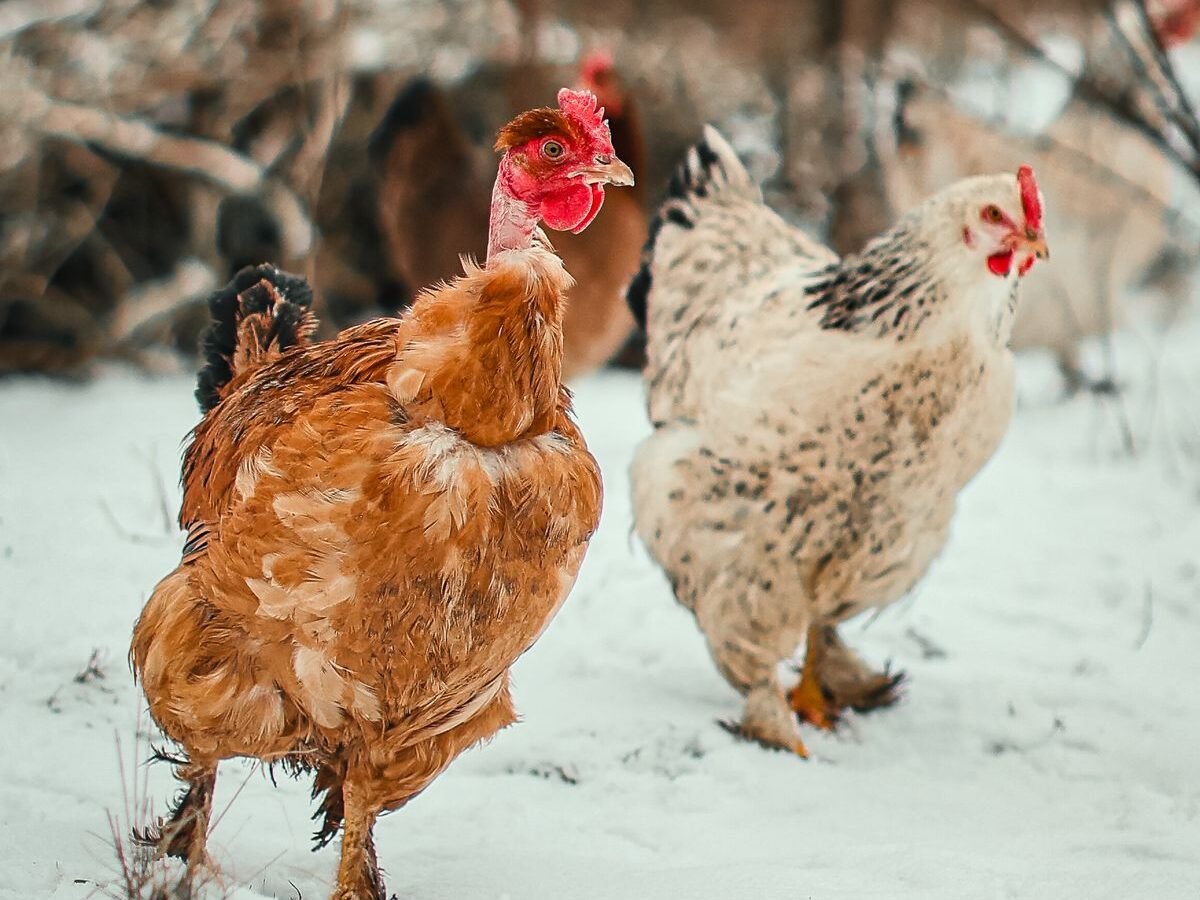
If you live anywhere that sees real winter — Minnesota, upstate New York, the Dakotas, New England — your breed choice matters more than any gadget you can buy. The right cold-hardy chicken breed will scratch through snow, lay eggs in January, and strut through a blizzard like it’s a mild inconvenience. The wrong breed will spend winter miserable, stop laying entirely, and possibly lose comb tips to frostbite.
The good news: dozens of breeds were developed in cold climates (Russia, Scandinavia, New England, the Midwest) specifically to thrive in freezing temperatures. Here are the 12 best, ranked for northern backyard flocks — with honest egg-laying numbers, egg colors, and beginner-friendliness notes so you can build your perfect winter flock.
What Makes a Chicken Breed Cold-Hardy?
Before the list, it helps to know what to look for:
- Small combs and wattles. Big, floppy combs (like a Leghorn’s) are frostbite magnets. Pea combs and rose combs hug the head and stay safe.
- Heavy, dense feathering. Fluffy, tight plumage traps heat. Feathered feet are a bonus (though they can get muddy).
- Larger body size. Bigger birds retain heat better — it’s simple physics.
- Cold-climate origins. Breeds developed in Russia, Scandinavia, Canada, and the northern US carry generations of winter selection in their genes.
The 12 Best Cold-Hardy Chicken Breeds
1. Buff Orpington — ★ Best Beginner Pick
The golden retriever of chickens. Big, fluffy, docile, and nearly bombproof in winter. Orpingtons are the breed most experienced keepers recommend to nervous first-timers, and for good reason — they’re calm, kid-friendly, and handle cold beautifully.
- Eggs: 200–280/year, light brown
- Temperament: Extremely gentle, great with kids
- Notes: Hens go broody often — a plus if you want chicks, a minus if you just want eggs
2. Rhode Island Red — ★ Best All-Around Layer
A heritage American breed built for New England winters. Hardy, productive, and self-sufficient — the classic dual-purpose farm bird. Slightly more assertive than Orpingtons but still very manageable.
- Eggs: 250–300/year, brown
- Temperament: Confident, independent
- Notes: One of the best winter layers on this list — keeps producing when others quit
3. Plymouth Barred Rock — ★ Best for Families
The iconic black-and-white striped bird of American farm history. Calm, curious, cold-tough, and consistent. Barred Rocks are fantastic foragers even in snow and handle confinement well too.
- Eggs: 200–280/year, light brown/pinkish
- Temperament: Friendly, inquisitive
- Notes: Excellent cold-weather foragers — they’ll find food in snow that other breeds walk past
4. Australorp — ★ Best Winter Egg Machine
The Australian cousin of the Orpington holds the world record for egg laying (364 eggs in 365 days by one legendary hen). Slightly sleeker than Buff Orpingtons but just as winter-tough.
- Eggs: 250–300/year, light brown
- Temperament: Calm, quiet
- Notes: Black plumage with a gorgeous beetle-green sheen in sunlight
5. Wyandotte — ★ Best Looking + Hardy
With their laced feather patterns and rose combs (naturally frostbite-resistant), Wyandottes look like they were designed for a snow-globe photo shoot. Developed in New York State specifically for harsh winters.
- Eggs: 200–240/year, brown
- Temperament: Calm but can be bossy in the pecking order
- Notes: The rose comb is a built-in winter advantage — almost no frostbite risk
6. Brahma — ★ Gentlest Giant
These massive, feather-footed birds were developed in the US from Asian stock and shrug off cold like it’s nothing. Despite their imposing size, they’re famously gentle — true gentle giants.
- Eggs: 150–200/year, brown
- Temperament: Extremely docile
- Notes: Slower to mature and lay fewer eggs, but unbeatable in deep cold; feathered feet need dry bedding to avoid ice balls
7. Speckled Sussex
A cheerful British heritage breed that lays well through winter and forages actively in cold weather. Sussex hens are curious, talkative, and add lovely speckled variety to a flock.
- Eggs: 240–280/year, light brown/cream
- Temperament: Friendly, active
- Notes: Great free-rangers; the speckling gets prettier with each molt
8. Easter Egger — ★ Best for Colorful Eggs
Not a true breed but a beloved hybrid — and one of the most cold-hardy, thanks to the pea combs and muffs inherited from their Ameraucana ancestry. Every keeper should have at least one for the sheer joy of blue and green eggs.
- Eggs: 200–280/year, blue, green, or pink
- Temperament: Friendly, quirky
- Notes: Egg color varies by bird — it’s a delightful surprise with each pullet
9. Buckeye
The only breed developed entirely by a woman (Nettie Metcalf, Ohio, 1896), Buckeyes were purpose-built for brutal Midwestern winters. Mahogany-red, pea-combed, active foragers, and excellent in deep snow.
- Eggs: 180–240/year, brown
- Temperament: Active, friendly
- Notes: Outstanding mousers and foragers — a true working homestead bird
10. Chantecler — ★ Best for Extreme Cold
Developed in Canada specifically to survive -40°F Quebec winters, the Chantecler is arguably the most cold-hardy breed on earth. Tiny comb and wattles, dense cushion comb, and a no-nonsense work ethic.
- Eggs: 180–230/year, brown
- Temperament: Calm, independent
- Notes: If you live where winter is genuinely dangerous, this is your bird; harder to find from hatcheries, so order early
11. Dominique — ★ America’s Oldest Breed
The original American homestead chicken, predating the Revolution. Barred plumage, rose comb, and 250+ years of selection for surviving harsh winters on minimal care.
- Eggs: 230–270/year, brown
- Temperament: Hardy, self-reliant
- Notes: Excellent foragers and alert against predators — a true survivor breed
12. Welsummer
A Dutch breed famous for dark, terracotta-speckled eggs that look hand-painted. Cold-hardy, calm, and beautiful — the eggs alone justify a spot in any northern flock.
- Eggs: 160–250/year, dark brown with speckles
- Temperament: Calm, intelligent
- Notes: Eggs are the darkest of any breed here — a showstopper in the carton
Quick-Comparison Cheat Sheet
| Breed | Eggs/Year | Egg Color | Beginner? | Standout Trait |
|—|—|—|—|—|
| Buff Orpington | 200–280 | Light brown | ★★★ | Gentlest, kid-proof |
| Rhode Island Red | 250–300 | Brown | ★★★ | Top winter layer |
| Plymouth Barred Rock | 200–280 | Light brown | ★★★ | Great forager |
| Australorp | 250–300 | Light brown | ★★★ | Record-setting layer |
| Wyandotte | 200–240 | Brown | ★★★ | Frostbite-proof comb |
| Brahma | 150–200 | Brown | ★★☆ | Gentle giant |
| Speckled Sussex | 240–280 | Cream | ★★★ | Cheerful forager |
| Easter Egger | 200–280 | Blue/green | ★★★ | Colorful eggs |
| Buckeye | 180–240 | Brown | ★★☆ | Extreme forager |
| Chantecler | 180–230 | Brown | ★★☆ | Survives -40°F |
| Dominique | 230–270 | Brown | ★★★ | Survivor breed |
| Welsummer | 160–250 | Dark speckled | ★★☆ | Gorgeous eggs |
Beginner Picks: The Perfect Starter Flock
If this is your first winter with chickens, keep it simple. You can’t go wrong with this trio:
1. 3 Buff Orpingtons — gentle, fluffy, kid-friendly, reliable
2. 3 Rhode Island Reds or Australorps — your winter egg engine
3. 2 Easter Eggers — blue and green eggs for fun, hardy as they come
That’s 8 hens, a rainbow egg carton, and a flock that will handle anything short of an arctic blast without a second thought.
Common Mistakes When Choosing Winter Breeds
1. Picking Mediterranean breeds for northern winters. Leghorns, Minorcas, and Anconas are fantastic layers but their huge combs are frostbite bait. Match the breed to your climate.
2. Buying straight-run chicks when you want layers. Half will be roosters. For egg flocks, buy sexed pullets.
3. Ignoring the comb. When in doubt between two breeds, pick the one with the smaller comb — it’s the single best frostbite predictor.
4. Getting one of each. Chickens are flock animals and breeds have different temperaments; groups of 2–3 per breed integrate much better than 12 singletons.
5. Forgetting winter doesn’t end at breed choice. Even the hardiest breed needs dry bedding, ventilation, and liquid water — breed selection is step one, not the whole plan.
FAQ: Cold-Hardy Chicken Breeds
Do cold-hardy breeds still lay eggs in winter?
Yes — though at reduced rates. Shorter daylight is the main limiter, not cold. Breeds like Rhode Island Reds, Australorps, and Plymouth Rocks are known for laying through winter better than most.
Can I mix cold-hardy breeds in one flock?
Absolutely — mixed flocks are the norm and the breeds on this list generally get along well. Just avoid mixing extremely docile breeds (Silkies) with assertive ones unless you manage the pecking order carefully.
When should I order chicks for a winter-ready flock?
Order chicks in early spring (March–April) so pullets are fully feathered and near laying age by fall. A pullet hatched in April is a tough, laying-ready hen by October.
Are roosters more cold-hardy than hens?
Not meaningfully — but roosters’ larger combs are more frostbite-prone. In very cold climates, a dab of petroleum jelly on large combs during cold snaps is an old keeper’s trick.
What’s the single hardiest breed for extreme cold?
The Chantecler, developed for -40°F Canadian winters, is the consensus pick. Buckeyes and Brahmas are close runners-up.
Conclusion: Pick the Bird, Skip the Worry
Breed selection is the highest-leverage winter decision you’ll make — get it right, and everything else gets easier. Choose small-combed, heavy-feathered, cold-climate breeds, and your flock will handle northern winters the way they were bred to: unbothered.
Next steps: once you’ve picked your breeds, make sure their home is ready with our https://amesfamilyfarm.com/winterize-chicken-coop-checklist/ — and if you’re still wondering whether they need extra warmth, read https://amesfamilyfarm.com/do-chickens-need-heat-in-winter/ for the honest answer (spoiler: they almost certainly don’t).
2 comments