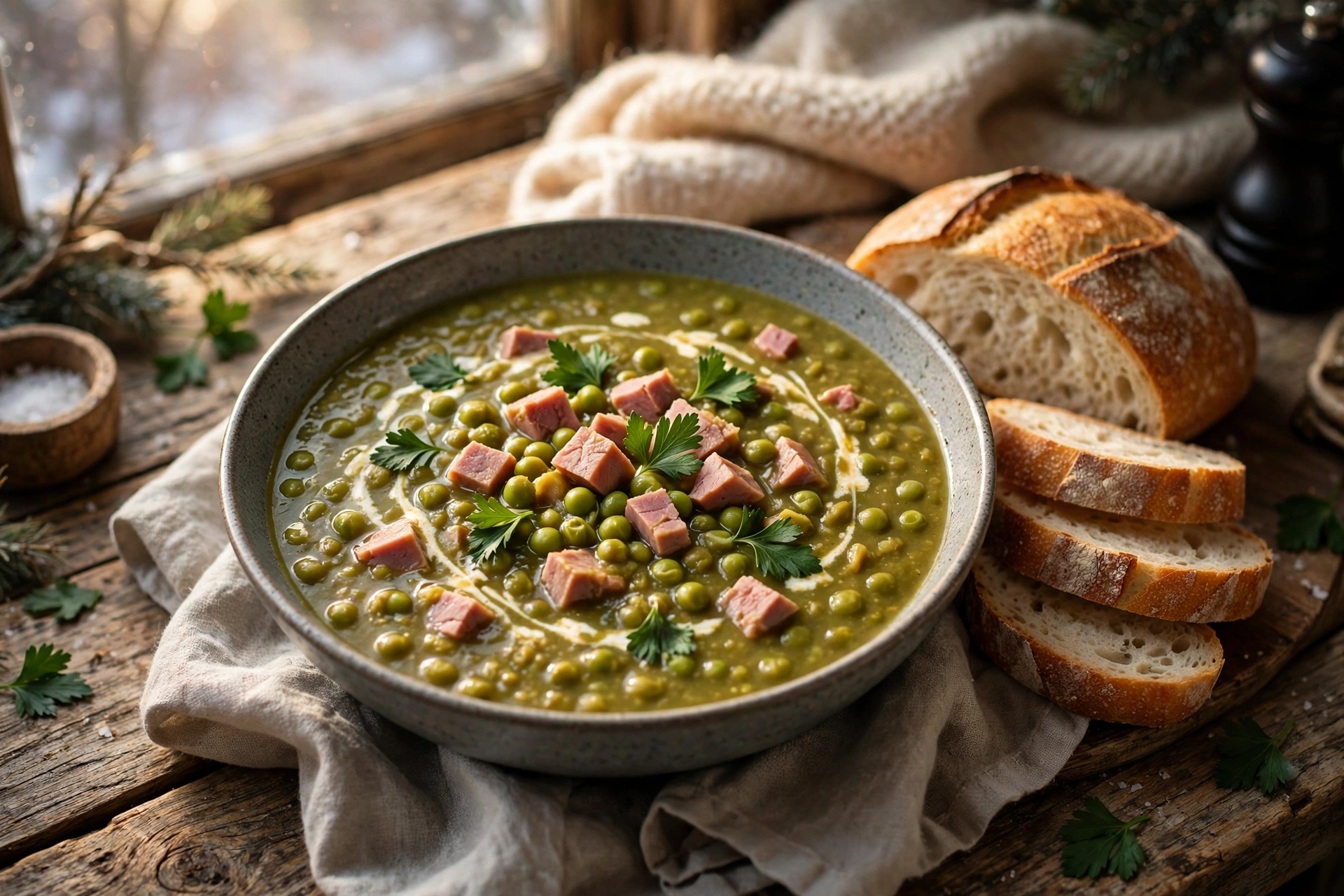
There is no soup in our house that delivers more comfort per dollar than split pea soup. A bag of dried split peas costs next to nothing, keeps in the pantry for months, and cooks down into a thick, velvety pot that tastes like it simmered all day — because it did, mostly without any help from me. On the coldest weeks of winter, when the grocery budget is tight and the family is hungry, this is the soup I reach for.
If you have never cooked with dried peas, do not be intimidated. Split peas are the most forgiving legume in the pantry. They need no overnight soaking, they break down on their own into a creamy texture, and they are hard to ruin. This guide covers the classic stovetop version, a slow-cooker option, and the variations that keep this humble soup interesting all winter long.
Why Split Peas Are a Pantry Superstar
Dried split peas are peas that have been dried, split in half, and had their skins removed. That processing is what makes them cook so quickly compared to whole dried beans — usually in about an hour on the stovetop, with no soaking required.
They are also genuinely nutritious: high in fiber and plant protein, naturally low in fat, and filling in a way that keeps people satisfied for hours. I am not making health claims here, just stating what generations of cooks have known — a bowl of split pea soup sticks to your ribs in the best possible way.
Best of all, split peas are cheap. A one-pound bag, which makes a pot that feeds six generously, often costs less than a single can of premium soup. When you are feeding a family through a long winter, that math matters. If you like thrifty pantry cooking, our homemade chicken stock guide is another way to turn scraps into something valuable, and our cabbage recipes collection stretches garden produce the same way.
Ingredients You Will Need
For one generous pot:
- 1 pound dried green split peas, rinsed and picked over
- 8 cups water or low-sodium chicken broth (or a mix)
- 1 smoked ham hock, or 1 cup diced ham
- 1 onion, diced
- 3 carrots, diced
- 2 stalks celery, diced
- 3 cloves garlic, minced
- 1 bay leaf
- 1 teaspoon dried thyme
- Salt and black pepper to taste
- Optional: 1 tablespoon butter or olive oil for sautéing
A note on the ham hock: it is traditional for a reason. As it simmers, it gives the soup a smoky depth that ham alone cannot quite match, and the meat falls off the bone into the pot. If you do not eat pork, skip it — the vegetarian version below is still delicious — but if you do, a ham hock is worth seeking out at the butcher counter. Leftover holiday ham works beautifully too, which makes this soup a natural follow-up to a big ham dinner.
📌 Pin this: Rinse the peas and pick out any small stones or shriveled peas before cooking. It takes one minute, and it is the one step you never want to skip with any dried legume.
Step 1: Build the Base
If you have the time, heat the butter or olive oil in a large pot over medium heat and cook the onion, carrots, and celery for about five minutes, until the onion turns translucent. This step adds a layer of sweetness that you cannot quite get from boiling alone.
If you do not have the time, skip it. Add everything to the pot raw, and the long simmer will still produce a very good soup. This recipe is forgiving by design — that is why it has survived in farmhouse kitchens for so long.
Step 2: Simmer Low and Slow
Add the rinsed peas, the water or broth, the ham hock or diced ham, the garlic, the bay leaf, and the thyme. Bring the pot to a boil, then reduce the heat to low, cover partially, and simmer for 60 to 90 minutes, stirring occasionally.
You will notice the peas start to break down after about forty-five minutes. That is exactly what you want. Split pea soup is not supposed to have distinct, whole peas floating in broth — it is supposed to thicken into something almost like a purée, with the vegetables melting into the background.
If the soup gets thicker than you like, stir in water or broth a cup at a time until it reaches the consistency you prefer. Some families like it thick enough to stand a spoon in; others prefer it thinner and more brothy. Both are correct.
Step 3: Finish and Season
Remove the bay leaf. If you used a ham hock, lift it out, let it cool enough to handle, and shred the meat back into the pot, discarding the bone and any gristle. Taste the soup and season with salt and pepper.
Go easy on the salt until the very end, especially if you used ham or salty broth. The soup concentrates as it cooks, and it is much easier to add salt than to fix an over-salted pot. A splash of vinegar or lemon juice at the end — just a teaspoon or two — brightens the whole pot without making it taste sour. This is my favorite finishing trick for bean and pea soups.
Serve with crusty bread for dunking. Around here, that means a loaf of our no-knead farmhouse bread when I have planned ahead, or plain crackers when I have not. Either way, the soup is the star.
Slow Cooker Method
Split pea soup adapts beautifully to the slow cooker, and this is the version I make most often on busy days:
Combine all the ingredients in the slow cooker, cover, and cook on LOW for 7 to 8 hours or on HIGH for 4 to 5 hours. Remove the bay leaf, shred the ham hock meat back in, and season at the end. The texture will be slightly thicker than the stovetop version, so thin it with broth if needed.
The slow cooker version is also the one I recommend for first-time split pea cooks, because there is almost no way to rush it or scorch it. Set it in the morning, come home to soup.
Variations Worth Trying
Once you have the classic version down, the soup welcomes experimentation:
- Vegetarian version: Skip the ham, use vegetable broth, and add a teaspoon of smoked paprika for the smoky note you lose without the hock. A drizzle of good olive oil at serving adds richness.
- Curry version: Add a tablespoon of curry powder and a can of coconut milk in the last thirty minutes. It sounds unusual, but peas and curry spices are a natural pairing.
- Chunky version: If you prefer texture, reserve half the carrots and add them in the last twenty minutes so they stay distinct, and blend only half the soup before serving.
- With potatoes: Add two diced potatoes at the start for an even heartier pot. They break down into the soup and make it thicker and more filling.
- With sausage: Brown sliced smoked sausage and stir it in during the last twenty minutes for a different kind of smoky flavor.
📌 Pin this: Blend only part of the soup if you like texture. An immersion blender run briefly through half the pot gives you creamy body with some vegetables left whole — the best of both styles.
Storing and Freezing
Split pea soup keeps in the refrigerator for up to five days, and it thickens considerably as it cools. Stir in a splash of water or broth when reheating to bring it back to your preferred consistency.
It also freezes exceptionally well — one of the best soups for freezing, in fact. Portion it into containers, leaving a little room for expansion, and freeze for up to three months. Thaw overnight in the refrigerator and reheat gently, stirring in liquid as needed. I keep a few containers in the freezer all winter as emergency suppers, and they have rescued more busy evenings than I can count.
A Quick Recap
This split pea soup recipe turns a bag of dried peas, some vegetables, and a ham hock into a thick, smoky, deeply comforting pot with almost no active work. Rinse the peas, simmer until they break down, season at the end, and serve with good bread. Make it on the stovetop or in the slow cooker, freeze the extras, and keep a bag of peas in the pantry for the next cold snap.
Your turn: is split pea soup a tradition in your house, or a first try? Either way, start with the classic version, and do not be surprised when the cheapest soup in your pantry becomes the one everyone asks for again. Keep a bag of peas on the shelf, and you will always be one quiet afternoon away from a pot of it.