Every fall, there’s a moment when I realize I have too many apples. The trees are loaded, the neighbors are dropping off bags of them, and applesauce season is already behind us. That’s when I break out the crockpot and start a batch of apple butter — and every single year, I wish I’d made twice as much.
Apple butter isn’t butter at all. It’s apples cooked down low and slow until they collapse into a thick, dark, caramel-sweet spread with the consistency of soft butter. No pectin, no fuss. And when you can it properly, those jars sit on the pantry shelf for a year, ready for toast, biscuits, pork chops, and holiday gifts.
Why Apple Butter Beats Applesauce
Applesauce is great, but apple butter is applesauce’s sophisticated older sibling. The long, slow cooking caramelizes the apples’ natural sugars, which deepens the flavor into something rich and almost buttery. It takes less sugar than you’d expect, it spreads instead of plops, and a little goes a long way.
It’s also one of the most forgiving preserves you can make. Unlike jam, there’s no pectin to worry about and no precise gel point to hit. You cook it until it’s thick. That’s the whole test. If you’ve never canned anything before, read my water bath canning for beginners guide first — apple butter is a perfect first project once you understand the basics.
📌 Pin this: Apple butter is ready when a spoonful holds its shape on a cold plate and no watery ring seeps out around it. That “plate test” is more reliable than any timer.
The Best Apples for Apple Butter
Here’s the good news: you don’t need perfect apples. Bruised, misshapen, slightly mealy apples are all fine for apple butter, because everything gets cooked down and pureed. This is the recipe that rescues the windfalls and the ugly fruit.
That said, the variety matters for flavor. The best apple butter comes from a mix:
- Sweet-tart varieties (Jonathan, Winesap, Northern Spy, Cortland) give you the classic deep flavor with enough acidity to keep it bright.
- Sweet varieties (Golden Delicious, Fuji, Gala) need less added sugar but can taste flat on their own — mix them with tart apples.
- What to avoid: Red Delicious. It’s mealy, low-acid, and bland when cooked down. If someone gifts you a bag of Red Delicious, make applesauce, not apple butter.
I use whatever the orchard gives me, usually a half-and-half mix of tart and sweet. Don’t stress about the exact blend — the slow cooking and spices forgive a lot.
Ingredients
- 5 pounds of apples (about 15 medium), any mix of sweet and tart
- 1 cup apple cider or apple juice (water works in a pinch)
- 2 cups granulated sugar (adjust to taste — tart apples need more)
- 1 cup brown sugar, packed
- 2 teaspoons ground cinnamon
- 1/2 teaspoon ground cloves
- 1/2 teaspoon ground allspice
- 1/4 teaspoon ground nutmeg
- 1 tablespoon lemon juice
- Pinch of salt
That sugar amount is a starting point. Taste the cooked-down apples before you add it all — if your apples are naturally sweet, you may want less. Traditional apple butter uses plenty of sugar, but there’s no safety reason for the full amount; it’s purely about taste.
Equipment You’ll Need
- A large slow cooker (6-quart or bigger) — or a heavy Dutch oven
- An immersion blender or food mill (a regular blender works; blend in batches)
- A food mill or fine-mesh strainer (optional, for silkiness)
- Canning jars (pint or half-pint), new lids, and rings
- A water bath canner or a large stockpot with a rack
Step 1: Prep the Apples
Quarter the apples and cut out the cores. You do not need to peel them — the peels add color and pectin, and they’ll get strained or blended out later. Toss the quarters into the slow cooker with the cup of cider and the lemon juice (the lemon keeps the apples from browning while you work through the batch).
Fill the cooker as full as you can. Apples cook down to roughly a third of their raw volume, so what looks like an absurd mountain of fruit becomes a very reasonable amount of butter.
Step 2: The Long Slow Cook
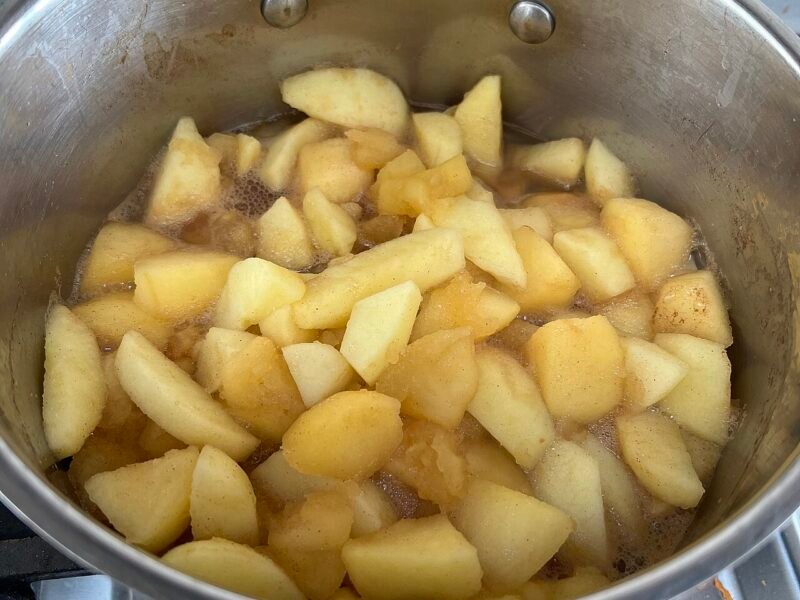
Cover and cook on LOW for 8 to 10 hours. Yes, really. I start mine after dinner and let it go overnight. By morning, the apples have completely collapsed into a soft, brownish mass, and the kitchen smells like the best candle you’ve ever smelled.
If you’re using a Dutch oven instead, cook it on the lowest possible heat, stirring every 30 minutes or so to prevent scorching. The slow cooker is easier — set it and sleep.
Step 3: Blend It Silky
Run an immersion blender straight through the cooked apples until completely smooth. If you don’t have one, work in batches with a regular blender — let it cool slightly first and don’t fill the blender more than halfway, because hot liquid expands.
For the silkiest possible texture, push the puree through a food mill or fine-mesh strainer. This catches any tough bits of peel. I’ll be honest: I skip this step most years and nobody has ever complained. But if you’re gifting jars, the extra step makes them look professional.
Step 4: Sweeten, Spice, and Thicken
Stir the sugar, brown sugar, spices, and salt into the puree. Taste it. Adjust the sugar and spices now — this is your last easy chance.
Here’s the critical part: the butter needs to thicken. With the lid off (or cracked), cook on LOW for another 2 to 4 hours, stirring every 30 to 45 minutes. The mixture will darken to a rich mahogany brown and reduce significantly. Do the plate test: spoon a little onto a cold plate. If a watery ring forms around it, keep cooking. If it holds its shape with no weeping, it’s done.
This second cook is where the magic happens — the caramelization, the concentration, the depth. Don’t rush it. Put on a podcast, stir when you remember, and let time do the work.
Step 5: Can It Safely
Apple butter is a high-acid fruit preserve, which means it’s safe for water bath canning following tested processing guidelines — the same approach in every trusted canning guide. Here’s the process:
- Prep your jars. Wash pint or half-pint jars in hot soapy water. Keep them hot (in the canner water or a low oven) so they don’t crack when filled.
- Fill. Ladle the hot apple butter into hot jars, leaving 1/4 inch of headspace. Wipe the rims clean with a damp cloth — any residue can prevent a seal.
- Lid and ring. Place a new lid on each jar and screw the ring on fingertip-tight. Not gorilla-tight — just snug.
- Process. Lower the jars into a boiling water bath canner with at least an inch of water over the lids. Process pints for 10 minutes (adjust for altitude: add 5 minutes above 3,000 feet, 10 minutes above 6,000 feet). Half-pints use the same time.
- Cool and check. Turn off the heat, wait 5 minutes, then lift the jars out. Let them sit undisturbed for 12 to 24 hours. Check the seals — lids should be concave and not flex when pressed.
Any jars that don’t seal go straight into the fridge and get eaten within a few weeks. Properly sealed jars keep in a cool, dark pantry for up to a year.
How to Use Apple Butter (Beyond Toast)
Toast is the obvious answer, but apple butter deserves a bigger role:
- Swirled into oatmeal or yogurt for breakfast
- As a glaze for pork chops or roasted chicken — brush it on during the last 10 minutes
- In thumbprint cookies instead of jam
- Stirred into barbecue sauce for a fruity depth
- On a cheese board next to sharp cheddar — the sweet-tart contrast is perfect
- In gift jars. This is the big one. A jar of homemade apple butter with a ribbon is a better holiday gift than anything from a store, and it costs you almost nothing. It belongs in every food gifts in jars christmas basket I put together.
It also pairs beautifully with other fall preserves. If you’re on a canning streak this season, my how to can tomatoes guide covers the savory side of the pantry.
📌 Pin this: A 5-pound batch of apples makes about 4 to 5 pints of apple butter. Double the batch when apples are cheap — you’ll use every jar.
Troubleshooting
My apple butter is too thin. Keep cooking it with the lid off. Time and evaporation are the only fix — there’s no shortcut. Some years it takes 4 hours of thickening; some years it takes 6.
My apple butter scorched on the bottom. Stir it well and taste it. If the scorched flavor is mild, you can often salvage the batch by transferring the un-scorched portion to a clean pot (don’t scrape the bottom). If it tastes burnt, it’s compost. Next time, stir more often and keep the heat lower.
The color is lighter than expected. Color deepens with cooking time and with the apple variety. Tart, red-skinned apples give the darkest color. A lighter apple butter tastes just as good — color is cosmetic.
Can I reduce the sugar? Yes. Sugar in apple butter is for flavor and texture, not safety — the water bath processing is what makes it shelf-stable. Reduce to taste, or swap in honey or maple syrup for part of the sugar.
Quick Recap
Apple butter is fall’s easiest preserve: quarter the apples, slow-cook overnight, blend silky, sweeten and spice, thicken with the lid off, and water-bath can for a pantry full of mahogany-gold jars. One bushel of apples becomes gifts, glazes, and breakfasts for months.
Your turn: what apple variety grows best near you? Start there, make a double batch, and put a jar aside for December — future you, assembling holiday gifts, will be very glad you did.