Every fall I watch the same drama play out in canning groups: someone wants to can apple pie filling, the recipe calls for Clear Jel, and Clear Jel is nowhere to be found — sold out online, not stocked at the local store, or just an ingredient they have never heard of. Then comes the dangerous part: well-meaning strangers suggesting flour or cornstarch as substitutes.
Here is the truth that saves the whole situation: you do not need Clear Jel at all. The safe, tested way to can apple pie filling without it is beautifully simple — can the apples in syrup with your spices, and thicken the filling when you open the jar to bake the pie. I have put up dozens of quarts this way. The pies taste like fall, the jars seal perfectly, and there is zero food-safety gray area.
Why Clear Jel Exists (and Why You Can Skip It)
Clear Jel is a modified food starch, and it is the only thickener that canning authorities consider safe for shelf-stable pie fillings. Regular flour and cornstarch are not recommended for canning because they can interfere with heat penetration during processing — the thick filling may not get hot enough all the way through to be safe, and that is not a risk worth taking with your family’s food.
So the standard tested recipes use Clear Jel. But here is what experienced canners figured out long ago: the thickener is for the pie, not for the canning. The preservation comes from the fruit, the sugar, the acidity, and the water-bath processing — not from the starch. Which means you can simply leave the thickener out of the jar entirely and add it at baking time, when heat penetration is not a safety question at all. Same pie. Same shelf life. No specialty ingredient.
📌 Pin this: Can pie filling WITHOUT any thickener — just apples, sugar, and spices in syrup. Thicken with cornstarch or flour when you bake. This is the safe workaround canning experts actually use.
Choosing Apples for Pie Filling
Not all apples hold up to canning. You want firm, tart apples that keep their shape through processing instead of dissolving into sauce:
- Best choices: Granny Smith, Honeycrisp, Braeburn, Jonagold, Northern Spy, Cortland. These stay in distinct slices.
- Good in blends: Golden Delicious and Fuji work well mixed with firmer varieties.
- Skip: Red Delicious and McIntosh go mushy — save those for applesauce.
I like a mix of tart and sweet in every jar — mostly Granny Smith with a handful of Honeycrisp. Taste your apples first; if they are very tart, you will want the full sugar in the recipe, and if they are sweet you can ease back slightly on the sugar (sugar is for flavor here, not safety, so small adjustments are fine).
Plan on roughly 12–14 pounds of apples for a full canner load of 7 quarts, or about 6 pounds for 4 pints. It always looks like too many apples. It is never too many apples.
The Recipe: No-Thickener Apple Pie Filling
Per 7-quart canner load (scale down proportionally for pints):
- 12–14 lbs firm apples, peeled, cored, and sliced 1/2-inch thick
- 5 1/2 cups granulated sugar
- 1 1/2 teaspoons ground cinnamon
- 1/2 teaspoon ground nutmeg
- 1/4 teaspoon ground cloves (optional — a little goes far)
- 2 1/2 cups water
- 5 tablespoons bottled lemon juice (this is the acid that keeps everything bright and safe — do not skip or reduce it)
To thicken at baking time (per quart jar): 3–4 tablespoons cornstarch or 1/4 cup flour, mixed into the filling before it goes into the pie shell.
Step 1: Prep the Apples
Peel, core, and slice your apples about 1/2-inch thick. Thinner slices cook down too much; thicker slices do not pack well. As you slice, drop the apples into a big bowl of cold water with a splash of lemon juice to keep them from browning while you work through the bushel.
📌 Pin this: A crank-style apple peeler turns a bushel of apples from an afternoon chore into a 30-minute job. Best $25 a canner ever spends.
Step 2: Make the Spiced Syrup
In a large pot, combine the sugar, cinnamon, nutmeg, cloves, water, and bottled lemon juice. Bring to a boil, stirring until the sugar dissolves completely. The kitchen will smell like every good October memory you have — this is the best-smelling step in all of canning.
Step 3: Hot-Pack the Apples
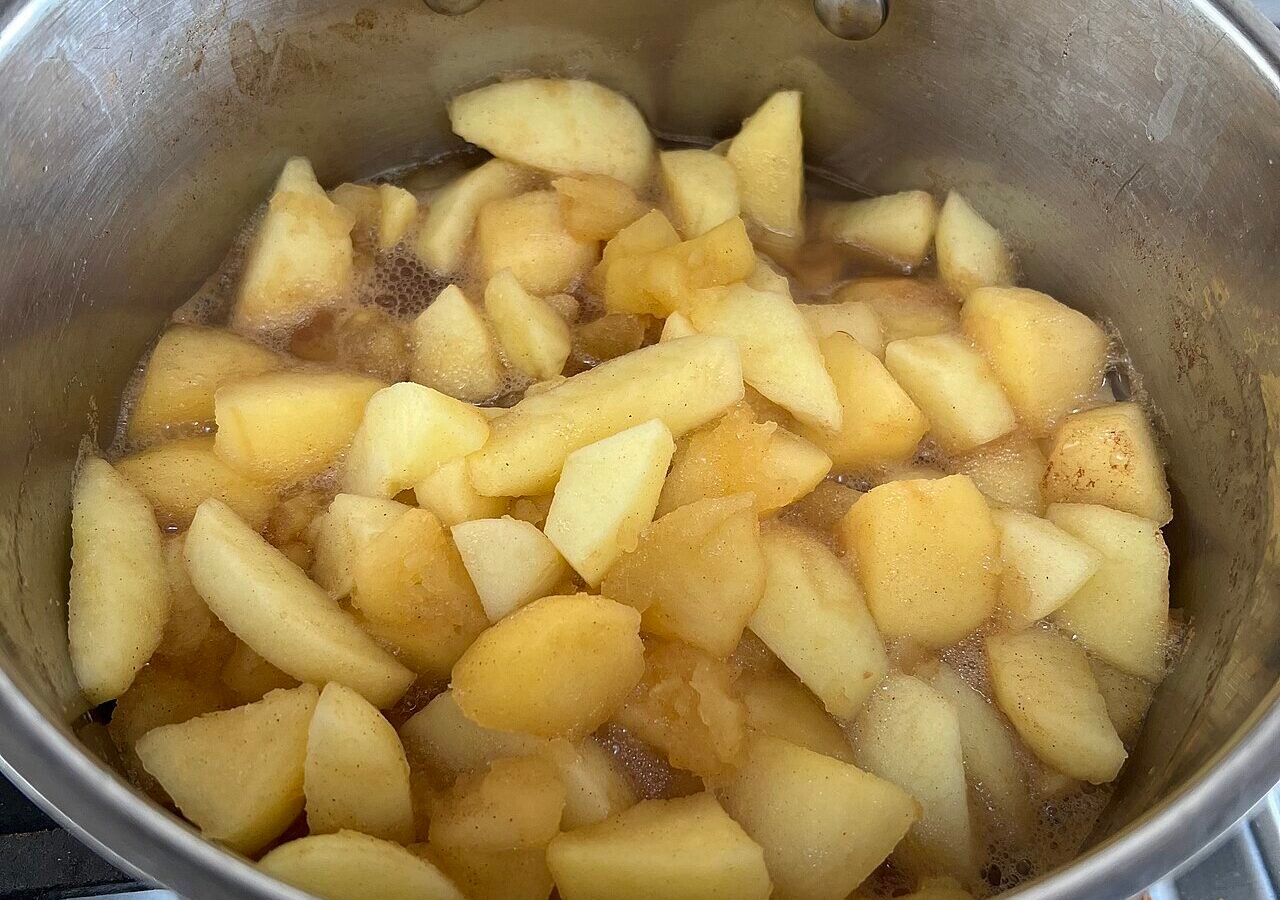
Drain your apple slices and add them to the boiling syrup in batches — do not dump all 14 pounds in at once or the syrup temperature will crash. Return each batch to a boil and cook for about 5 minutes, until the slices are heated through but still firm. They should look slightly translucent at the edges but hold their shape when you lift one with a spoon.
Using a slotted spoon, pack the hot apple slices into hot, clean quart jars, leaving generous 1-inch headspace. Then ladle the boiling syrup over the apples, maintaining that 1-inch headspace. Run a clean chopstick or bubble-remover tool around the inside of each jar to release trapped air, wipe the rims with a damp cloth, and apply lids and bands fingertip-tight.
Step 4: Process in the Water Bath
Load the jars into your boiling water-bath canner with 1–2 inches of water over the tops. Bring to a full rolling boil and process for the full time your tested recipe specifies — standard tested processing for apple pie filling is 25 minutes for pints and quarts at low altitude, with added time for higher elevations per standard altitude charts. (If you are new to the equipment side of this, my water bath canning for beginners guide walks through the whole canner setup.)
When time is up, turn off the heat, wait 5 minutes, and lift the jars onto a towel. Rest them undisturbed for 12–24 hours, listening for the seals. Check every lid before storing — any jar that did not seal goes straight to the fridge and gets used within a week or two.
Step 5 (Months Later): Bake the Pie
This is where the no-thickener method pays off. Open a jar, pour the filling and syrup into a bowl, and stir in your thickener of choice — cornstarch for a glossy filling, flour for a classic homestyle one. Pour into your pie shell, dot with butter, top with crust, and bake as usual. The filling thickens in the oven exactly like a fresh-made pie, because at this point it essentially is one.
One quart fills a standard 9-inch pie generously. One pint is perfect for hand pies, turnovers, or a small crisp for two.
Storage and Shelf Life
Sealed jars keep a full year in a cool, dark pantry — though in my house they rarely survive past February. Once opened, refrigerate and use within a week or two. Label every jar with the contents and date; “mystery jars” are how pantries develop archaeological layers. I also note the apple variety on each label — six months later you will thank yourself when the Honeycrisp batch tastes noticeably better than the mystery blend.
What NOT to Do
Because this topic attracts risky advice, let me be blunt about the don’ts:
- Do not add flour or cornstarch to the jars before processing. They are fine at baking time, unsafe in the canner.
- Do not reduce the lemon juice. Bottled lemon juice has standardized acidity; it is doing safety work, not just flavor work.
- Do not water-bath a recipe designed for pressure canning, or vice versa. Use apple/pie-filling recipes as written by trusted canning sources.
- Do not skip the altitude adjustment. Processing times assume sea level to 1,000 feet; higher than that, add time per the standard charts.
The same principles apply across all my preserving recipes — if you have canned tomatoes with my how to can tomatoes method, you already understand the acid-plus-heat logic that makes this safe.
Beyond Pie: What Else to Do With a Jar
Apple pie filling is secretly one of the most versatile jars in the pantry:
- Apple crisp: dump a quart into a baking dish, top with oat crumble, bake 30 minutes.
- Pancake topping: warm it and spoon over pancakes instead of syrup.
- Pork companion: a spoonful alongside roast pork is a classic pairing that never misses.
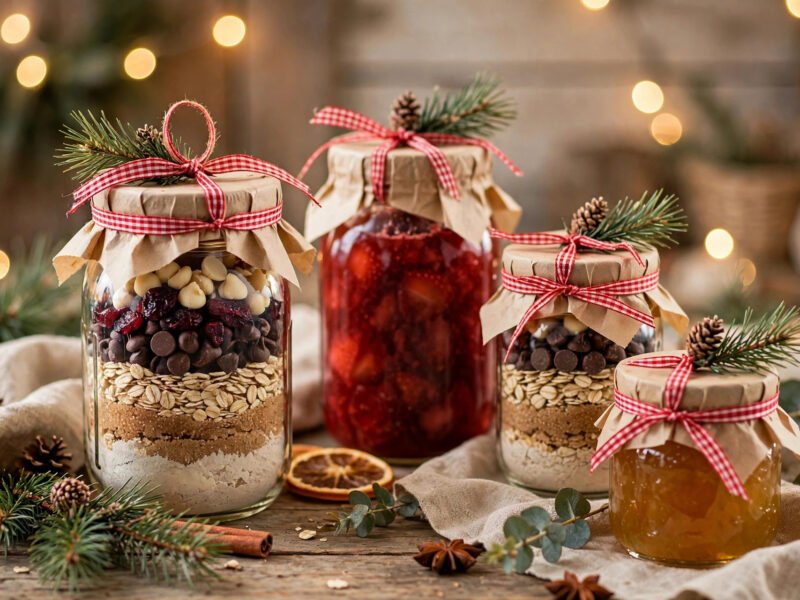
- Gift jars: a quart of pie filling with a ribbon and a hand-written “just add crust” tag makes a food gifts in jars christmas basket feel genuinely generous.
Your Turn
If Clear Jel has been the thing standing between you and a pantry full of pie filling, that obstacle just disappeared. This weekend, grab a bag of Granny Smiths, skip the specialty starch aisle entirely, and put up your first batch. Come January, when you pull a jar off the shelf and the whole house smells like October, you will wonder why you ever waited.