The first time I put out a Thanksgiving charcuterie board, it was pure self-defense. Dinner was running late, guests were arriving hungry, and I needed something on the table fast that did not require the oven. I grabbed a wooden board, piled on cheese, crackers, and whatever fruit was in the fridge, and set it out with a shrug. That board was empty in twenty minutes, and now it is the most requested part of our Thanksgiving.
A Thanksgiving charcuterie board is not about fancy ingredients or perfect styling. It is about giving hungry people something beautiful to graze on while the turkey rests, and giving the cook a break from the stove. Done right, it looks like you spent hours on it, when really you spent twenty minutes arranging things you mostly already had. Here is how we build ours, with ideas for every budget and every size of gathering.
Start With the Board and the Bowls
You do not need a special board. We use a big wooden cutting board, and some years we have used a baking sheet lined with parchment when the crowd was bigger than the board. A large platter, a slab of marble, or even a clean wooden tray all work. The rule is simple: the board should be big enough to look abundant, not crowded to the point that nothing can be picked up.
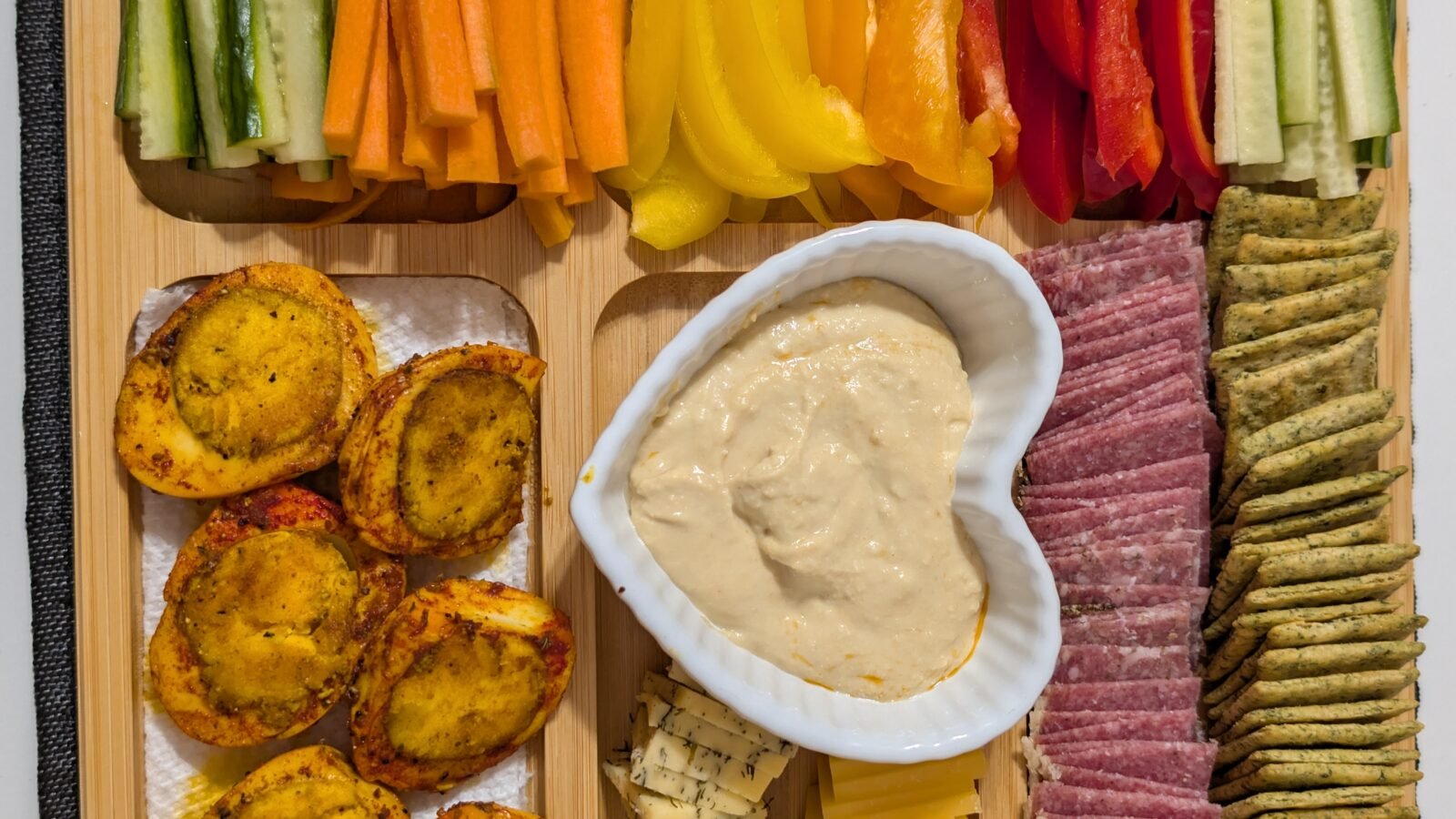
Place two or three small bowls on the board first. These hold the wet or runny things — jam, mustard, honey, olives — and they anchor the whole arrangement. Put one bowl near each end and one in the middle, then build everything else around them. This one step makes the difference between a board that looks intentional and a pile of snacks on a plank.
If you are short on bowls, small mason jars work beautifully and fit the farmhouse table. A jar of our apple butter canning recipe or a small pot of honey with a dipper looks right at home on a Thanksgiving board, and guests love discovering a homemade touch among the store-bought cheese.
Choose Three Cheeses, Not Ten
The biggest mistake with a charcuterie board is buying too many cheeses. Three is plenty, and three chosen well beats a dozen chosen at random. Pick one soft, one hard, and one interesting. Our usual trio is a creamy brie, a sharp aged cheddar, and a smoked gouda or a crumbly blue for the adventurous.
Cut the hard cheese into slices or cubes so guests can grab it easily. Leave the soft cheese whole with a knife beside it — a whole wheel of brie looks generous and invites people to cut their own portion. If you want a showpiece, warm the brie in the oven for ten minutes, top it with cranberry sauce and chopped pecans, and set it on the board still warm. It will be the first thing gone.
Buy about two ounces of cheese per person if the board is an appetizer, and a little more if it is standing in for a full lunch. And do not stress about expensive cheese. A good grocery-store cheddar and a decent brie, arranged with care, always beat a fancy cheese served straight from the wrapper.
Meats That Fold, Roll, and Drape
Cured meats are what make a board feel like a celebration rather than a cheese plate. Salami, prosciutto, and smoked turkey are our Thanksgiving staples — the smoked turkey nods to the main event without competing with it. Choose two or three meats, and buy about two ounces per person.
Fold salami slices in half, then in half again, and tuck them in a loose row that looks like a ribbon running across the board. Drape prosciutto in soft folds rather than laying it flat, which gives it height and makes the board look full. Roll up slices of smoked turkey into little cylinders and stand them in a group near the edge.
If anyone at your table does not eat meat, build a second small board or one corner of the big board without it. Roasted chickpeas, marinated mushrooms, and extra cheese fill the gap nicely, and everyone should be able to graze from the same table.
Fall Fruit Is the Secret Ingredient
Fruit is what makes a Thanksgiving board look like Thanksgiving instead of just any party platter. Fresh figs, if you can find them, are the gold standard — cut them in half and tuck them into gaps. Red and green grapes still on the stem add color and fill space beautifully. Sliced apples and pears, fanned out in overlapping rows, bring crunch and a familiar fall flavor.
Dried fruit works just as well and lasts longer on the table. Dried cranberries scattered in the gaps add pops of red, dried apricots bring a warm orange, and dried apple rings echo the orchard harvest. A handful of pomegranate seeds sprinkled over the brie looks like jewels and tastes like a celebration.
Wash and dry all fresh fruit before arranging, and slice apples and pears just before serving so they do not brown. A quick squeeze of lemon over the cut sides buys you an extra hour if you need to prep ahead. This is also where a jar of homemade preserves earns its place — a spoonful of cranberry jam beside the brie is the flavor combination guests remember.
Crackers, Bread, and Something Crunchy
Every board needs vehicles for the cheese and spreads. Offer two or three kinds: a plain water cracker, a seeded or multigrain cracker, and slices of a crusty bread or baguette. Toast the bread slices lightly so they hold up under soft cheese without breaking. Fan the crackers in overlapping rows near the cheeses they pair with, rather than stacking them in a pile at one end.
Add something crunchy for texture. Roasted nuts — pecans, walnuts, or almonds — fill gaps and add a salty crunch that balances the richness. A small pile of spiced pecans, still warm from the oven, is the detail guests ask about. If you carved pumpkins this fall, a bowl of roasted pumpkin seeds from our fall pumpkin baking recipes season adds a homemade crunch that costs nothing.
Keep a few gluten-free crackers on the side if you have guests who need them, labeled with a little card. It is a small kindness that takes no extra effort, and it means everyone can enjoy the board.
Spreads, Mustards, and Pickles
The small bowls you placed first now earn their keep. Fill one with a grainy mustard, one with honey, and one with a jam or chutney. Honey over blue cheese is a combination that converts skeptics. Mustard with salami is classic for a reason. Jam with brie is the bite people go back for.
Pickles and olives add the briny bite that keeps a rich board from feeling heavy. Cornichons, pickled onions, or a spoonful of our bread and butter pickles canning cut through the fat of the cheese and meat and reset the palate between bites. Set them in a small bowl or a little pile near the meats, and do not be shy — they disappear faster than you expect.
Taste as you go. The goal is a balance of salty, sweet, creamy, crunchy, and tangy on every part of the board, so that no matter where a guest starts, they get a good bite.
Arranging Without Overthinking It
Here is the arranging method that never fails us. Place the bowls first, then the cheeses in different areas of the board, then the meats in folds and rows between them. Next, add the crackers in fans and the bread in a stack. Then fill every gap with fruit, nuts, and pickles, working from the biggest pieces to the smallest.
Step back and look. If you see bare board, fill it with grapes or nuts. If one area looks crowded, move a few pieces to a thinner spot. The board should look abundant, like it might spill over, but every item should still be reachable without moving something else. Garnish with a few sprigs of rosemary or thyme tucked into gaps — they smell wonderful, cost nothing if you grow herbs, and make the whole board look like a holiday centerpiece.
Thanksgiving Timing and Leftovers
A charcuterie board solves the hardest part of Thanksgiving timing: hungry guests and a turkey that is not ready. Put the board out when the first guests arrive, and let people graze while you finish cooking. It buys you an hour of goodwill, and it means nobody is hovering in the kitchen asking when dinner will be ready.
After dinner, the board makes a second appearance as a late-night snack station. Cover any leftovers, refrigerate them, and set the board out again in the evening with fresh crackers. Cold turkey sandwiches get all the attention the day after Thanksgiving, but a rebuilt board with leftover cheese and fruit is the quiet hero of the holiday weekend.
If you are planning the full holiday menu, our easy homemade afternoon snacks list has more ideas for keeping guests happy between meals, and a loaf of no knead farmhouse bread sliced for the board beats any store-bought baguette.
Your Turn
Do not wait for a perfect occasion to build your first Thanksgiving charcuterie board. Start with the cheese you like, the crackers you already buy, and the fruit in your fridge, and arrange it on the biggest board you own. Add one homemade touch — a jar of jam, a bowl of roasted nuts, a sprig of rosemary — and watch what happens. The board will empty, the cook will get a break, and Thanksgiving will feel a little more like a celebration and a little less like a marathon.