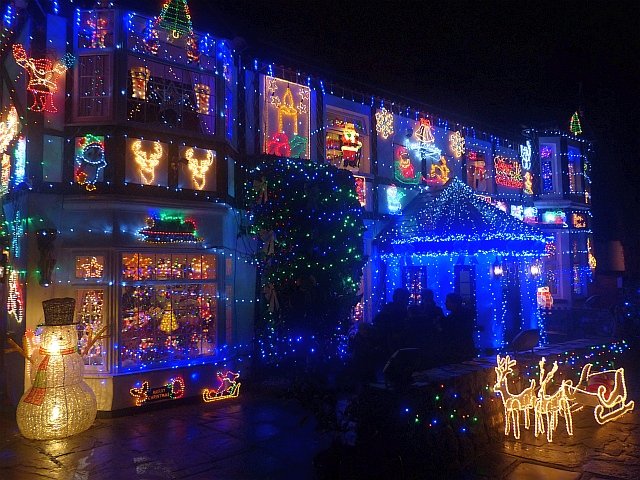
Outdoor Christmas decor is the first thing anyone sees, and for a farmhouse it sets the whole tone of the season. A yard dressed with warm lights, a full wreath on the door, and a few well-placed wooden accents says “welcome” long before anyone steps inside. The good news is that a farmhouse yard does not need an elaborate display or a big budget to look finished. It needs a plan, a few strong focal points, and decorations that can handle real winter weather.
The most common mistake with outdoor decorating is buying pieces one at a time with no overall picture in mind. The result is a yard full of decorations that do not relate to each other — a flashing reindeer next to a rustic lantern, a neon sign beside a wooden sleigh. A farmhouse look works best when the pieces share a palette and a mood: warm white or soft multicolor lights, natural greens, wood, metal, and a little red. Pick that mood first, then choose pieces that fit it.
This guide covers the pieces that work best in a farmhouse yard — string lights, wreaths and garlands, wood signs, planters, and pathway decor — plus the safety basics that keep an outdoor display safe through rain, snow, and wind. For more ideas that carry the same style from the yard to the front door, the christmas porch decorating ideas guide pairs well with this one.
Start With a Plan Before You Buy Anything
A short planning session saves money and prevents the cluttered look that comes from random purchases. Walk the yard at dusk and look at it the way a visitor would.
Pick two or three focal points. A farmhouse yard looks best with a clear hierarchy: the front door, one big tree or the roofline, and one ground-level feature such as a planter grouping or a lit pathway. Everything else should support those points, not compete with them. When every corner has something flashing or glowing, nothing stands out.
Measure before shopping. Measure the roofline, the fence run, the porch rail, and the distance from the nearest outdoor outlet to each display area. String lights come in fixed lengths, and guessing leads to a strand that is ten feet short or a tangled excess coiled behind a bush. Write the measurements down and take the list to the store.
Choose a color palette and stick to it. Warm white lights are the classic farmhouse choice and they flatter wood, stone, and greenery. Soft multicolor lights work too, especially for a more playful yard, but mixing warm white and multicolor on the same house usually looks accidental. Pick one and repeat it across the roofline, the trees, and the porch.
Set a budget per zone. Divide the budget between lights, greenery, and accents. Lights usually take the biggest share because they cover the most area. A good rule is to spend on lights and one or two statement pieces, and fill the rest with inexpensive natural materials such as pinecones, evergreen boughs, and firewood stacks.
📌 Pin this: Measure the roofline, fence, and porch before buying lights — a strand that is ten feet short is the most common outdoor decorating frustration.
String Lights That Actually Look Good
String lights do most of the work in an outdoor display, and a few techniques make the difference between a yard that glows and a yard that glares.
Outline the roofline. The roofline is the single most effective place for lights. Run one continuous strand along the gutters or eaves, keeping the spacing even and the line level. Clip the strand to the gutter or shingle edge with plastic light clips rather than nails or staples, which damage the roof and create a safety hazard. A single clean line along the roof reads as intentional and polished.
Wrap trees, do not just drape them. For a yard tree, wrap the trunk and the main branches in a spiral, spacing the wraps about six inches apart. Wrapping gives depth and makes the tree glow from the inside out. Draping lights over the outside of the branches looks thin by comparison and the lights slide off in the first wind.
Light the fence and the porch rail. A fence line strung with lights frames the yard and makes the whole property feel finished from the street. On the porch, wrap the railings and wind a strand through a garland. The porch is where the warm light matters most, because it is the part of the display people stand next to.
Use warm white for a farmhouse feel. Warm white (around 2700K) looks like candlelight and flatters natural materials. Cool white looks crisp but can feel stark against wood and stone. If the yard already has multicolor pieces, match the light color to them rather than introducing a second palette.
Add a timer. A timer that switches the lights on at dusk and off around midnight saves electricity and saves the trouble of going outside in the cold every night. It also means the display is lit during the hours when people actually see it.
Wreaths, Garlands, and Door Decor
Greenery is the farmhouse decorator’s best friend outdoors because it is inexpensive, weather-tough, and instantly seasonal.
One big wreath on the front door. A full evergreen wreath, at least 24 inches across, with a simple bow and a few pinecones, is the anchor of the whole entry. It should be large enough to read from the street. Small wreaths disappear against a farmhouse door, especially a dark-painted one. Hang it with a sturdy wreath hanger or a nail, and check that it clears the storm door if there is one.
Garland along the porch rail and windows. Fresh or high-quality artificial garland draped along the porch rail, with the ends secured and the middle allowed to sag gently, frames the entry. Add the same garland treatment to one or two front windows for balance. A few battery-operated fairy lights woven into the garland make it glow after dark without running another cord.
Wreaths on outbuildings. A small wreath on the barn door, the chicken coop, or a fence gate ties the whole property together. This is a detail that costs very little and makes the yard feel like one decorated place rather than one decorated door. For more ways to carry a theme across the property, the homemade christmas decorations guide has simple rustic projects that work indoors and out.
Keep greenery fresh. Fresh evergreen lasts for weeks outdoors in cold weather, which is one of the advantages of a December display. If the garland starts to dry out, mist it lightly with water. Artificial garland should be rated for outdoor use — indoor-only garland fades and frays in sun and rain.
Wood Signs and Farmhouse Accents
Wood is the material that makes a farmhouse display feel like a farmhouse display rather than a generic holiday display.
A welcome sign by the door. A painted or stenciled wooden sign — “Merry Christmas,” “Welcome,” or a simple tree shape — leaning by the front door or hanging beside it adds a handmade note. Signs made from reclaimed barn wood or pallet boards fit the style best, and a coat of outdoor sealant keeps the paint from peeling in wet weather.
Crates, lanterns, and buckets. A stack of wooden crates beside the door, a metal lantern with a battery candle, and a galvanized bucket filled with evergreen boughs and pinecones make a grouping that looks collected over time rather than bought in one trip. Group items in odd numbers — three or five pieces — and vary the heights so the eye moves across the arrangement.
A wooden sleigh or wagon. An old wagon or a simple wooden sleigh filled with wrapped boxes and greenery is a classic farmhouse yard piece. Place it where it can be seen from the road but not where it blocks the walkway. If it is a real antique, keep it under the porch overhang so it is not sitting in snow all month.
Keep the palette natural. Wood, galvanized metal, burlap, and evergreen green are the farmhouse palette. One red accent — a bow, a berry sprig, a painted sign — is enough. Too much red, and the display tips from rustic into cartoon.
Planters and Pathway Decor
The ground level is where a yard display either feels finished or feels forgotten. Planters and pathway lights fill that space.
Evergreen planters by the door. Fill large pots or wooden boxes with evergreen branches, red berries, pinecones, and a few bare twigs sprayed white or gold. These planters look good from the day they are built until the decorations come down, and they need no electricity. Two matching planters flanking the front door are the simplest high-impact move in outdoor decorating.
Light the pathway. A row of small lanterns, stake lights, or luminarias along the walkway guides visitors to the door and makes the yard feel welcoming after dark. Space them evenly, about three feet apart, and keep them low so the light falls on the path rather than in people’s eyes. Battery or solar stake lights are the easiest option because they need no cords at all.
Candy cane stakes and simple markers. Striped stakes or small wooden trees placed along the path add color at ground level. Use them sparingly — a row of ten identical stakes reads as a fence, while four or five spaced out reads as decoration.
Don’t forget the mailbox. A small swag of greenery and a red bow on the mailbox is a tiny touch that people notice. It is also the decoration that the mail carrier sees every day, which is reason enough to do it well. The same greenery-and-bow treatment works on a fence post or a lamppost. For more entryway ideas that connect the yard to the house, see the christmas porch decorating ideas guide.
The Yard as a Scene
The best outdoor displays read as one scene, not as a collection of separate decorations. A few design habits make that happen.
Group, don’t scatter. Decorations look stronger in clusters than spread one by one across the yard. A cluster of planters, lanterns, and a sign by the door has more presence than the same pieces dotted along the fence, the tree, and the porch.
Vary the heights. A display with something tall (a wrapped tree or a sign), something medium (planters or a wreath), and something low (pathway lights or a crate) feels complete. A display where everything sits at the same height looks flat from the street.
Leave empty space. Half the yard should stay undecorated. Empty lawn and dark sky are what make the lit areas stand out. A yard with no breathing room looks like a store display, not a home.
One statement piece is enough. If there is a big lit tree, a large sleigh, or a dramatic roofline, let it be the star and keep everything else quiet. Two statement pieces compete; one statement piece with supporting details wins.
📌 Pin this: Group decorations in clusters of three or five with varied heights — a tall tree, medium planters, and low pathway lights make a yard feel like one finished scene.
Outdoor Decor Safety
Outdoor Christmas decor is electrical equipment used in wet, cold, windy conditions. The safety basics are not optional, and they are simple.
Use outdoor-rated lights and cords only. Every strand, cord, and timer used outside must be labeled for outdoor use. Indoor-only lights have thinner insulation and unsealed sockets, and they are a fire and shock risk in rain or snow. Check the label before hanging anything.
Plug into a GFCI outlet. Outdoor outlets should be ground-fault protected. If the nearest outlet is not GFCI, use a portable GFCI adapter or have an electrician fit one. Never run an indoor extension cord out through a window or door to power an outdoor display.
Keep connections off the ground. Where two cords join, use a weatherproof connection box or wrap the joint in electrical tape and raise it off the ground on a small stake or brick. Connections sitting in puddles or snow are the most common cause of tripped breakers and dead displays.
Secure fixtures against wind. Clip lights firmly, weigh down freestanding pieces, and tie down anything tall or top-heavy. A strand that comes loose in a storm can whip against the house, and a decoration that blows into the road is a hazard. Check the display after the first big wind of the season and tighten anything that has shifted.
Do not overload circuits. Most household outdoor circuits handle about 1,800 watts. LED strings use very little power, which is one reason to choose them, but old incandescent strands add up fast. Add up the wattage on the box labels before plugging a whole display into one outlet, and spread the load across two circuits if the total is close to the limit.
Use a ladder safely. Most outdoor decorating injuries come from ladders, not electricity. Use a sturdy ladder on level ground, have someone hold it, never reach more than an arm’s length to either side, and never hang lights in rain, ice, or high wind. If the roofline is too high to reach comfortably, hire the job out — it costs less than a fall.
Inspect before you hang. Unroll every strand and check for cracked bulbs, frayed wires, and damaged sockets before it goes up. A strand that worked fine last year can develop damage in storage. Discard damaged strands rather than repairing them with tape. For more seasonal safety habits around the house, the christmas fireplace decor guide covers safe decorating around heat sources indoors.
Budget-Friendly Outdoor Decor
A farmhouse yard does not need a large budget. Some of the best-looking displays cost very little because they use what the property already has.
Cut your own greenery. Evergreen boughs, pinecones, and bare branches from the yard are free and they look better than most store-bought garland. A bundle of boughs tied with twine makes a swag for the door, the fence, or the mailbox.
Use what is already there. A stack of firewood, a wheelbarrow, a galvanized tub, and a wooden ladder are farmhouse props that need nothing more than a bow or a strand of lights to become Christmas decor. Decorating with objects the yard already owns is what makes a display look authentic.
Buy lights after Christmas. The best time to buy outdoor lights is the week after Christmas, when they go on deep clearance. Buy for next year, test every strand before storing it, and the following December starts with a full set of working lights at half the price.
One new piece a year. Instead of buying a whole display at once, add one good piece each year — a large wreath one year, a quality light set the next, a wooden sign after that. In three or four years the yard has a collected, layered look that no single shopping trip can buy.
Taking It Down and Storing It
The display ends in January, and how it is stored decides how easy next December will be.
Take lights down on a dry day. Wait for a dry, mild day in early January. Wet strands stored in a box grow mold and corrode, and cold fingers make the job slower and more frustrating.
Coil, don’t wad. Wrap each strand around a spool, a piece of cardboard, or your elbow and tie it loosely. A wadded ball of lights takes an hour to untangle next year and often breaks bulbs in the process.
Label everything. A strip of masking tape on each box — “roofline,” “porch rail,” “tree” — means next year’s setup starts with the right box in the right place instead of an afternoon of sorting.
Store greenery and signs dry. Wooden signs and artificial garland go in a dry shed or garage, not a damp barn corner. A coat of sealant on wooden pieces before storage keeps them looking good for the next season. The kitchen christmas decor guide has storage tips that work for indoor pieces too, and the same label-everything habit applies.
FAQ: Outdoor Christmas Decor Ideas
How many lights do I need for a house?
A typical single-story farmhouse roofline takes about 100 to 150 feet of lights, depending on the length of the gutters and whether the porch is included. Measure the run first and buy strands that add up to the measurement plus a little extra for the connection points.
Are LED lights worth the higher price?
Yes, for outdoor use. LEDs use a fraction of the electricity of incandescent strands, they stay cool, and they last many seasons. The savings on the power bill and on replacements usually cover the higher upfront cost within two seasons.
Can I leave outdoor lights up all winter?
Yes, if they are outdoor-rated and the connections are protected. Take them down by late January, though — sun, ice, and wind wear out even good strands over time, and a display left up into spring looks neglected.
What is the safest way to hang roofline lights?
Use plastic gutter clips or shingle clips, work from a stable ladder with a helper, and never use nails or staples. Hang lights on a dry, calm day and test the strand on the ground before carrying it up the ladder.
How do I keep deer or wind from damaging the display?
Secure everything with clips and ties, weigh down freestanding pieces with sandbags or bricks, and keep low greenery arrangements behind the porch rail where animals are less likely to browse them. A display that is tied down survives storms that flatten a loose one.
Do solar lights work for a Christmas display?
Solar stake lights work well for pathways and small accents, but they are weak in December when days are short and often cloudy. Use them as a supplement to plug-in lights, not as the main display.
Conclusion
A farmhouse yard dressed for Christmas does not need to be the brightest house on the road. It needs to look like someone who lives there took the time to make it welcoming: a clean line of warm lights, a full wreath, a few wooden pieces, and a lit path to the door. Start with the roofline and the front door, add one ground-level grouping, check the safety basics, and stop before the yard gets crowded. The result is a display that looks good from the street, feels good to come home to, and comes down in January without a tangled mess in the storage box.
Your action step this week: Walk the yard at dusk with a notepad, pick the two focal points, and measure the roofline and the path from the nearest outdoor outlet. That one walk is the whole plan — everything after it is just shopping and hanging.