January 1 is the one morning of the year when nobody wants a complicated breakfast. The night was late, the house is quiet, and the first meal of the new year should feel easy, warm, and a little bit special — without requiring anyone to stand at the stove for an hour.
A good New Year’s Day brunch has three qualities: most of it can be made ahead, everything can be served at the table family-style, and there is something for every appetite — eggs for the hungry, pancakes for the kids, fruit for the light eaters, and coffee for everyone. This guide collects easy recipes for each part of the meal, plus a simple plan for putting them together.
The Plan: What to Make Ahead
The secret to a relaxed January 1 is doing the work on December 31. A brunch where everything is cooked to order is a brunch where the cook never sits down.
The night before (December 31, after dinner):
- Assemble the overnight casserole in its baking dish, cover, and refrigerate.
- Mix pancake batter in a jar or pitcher and refrigerate.
- Set out the coffee maker, mugs, plates, and the table.
- Slice fruit and store it in a covered bowl in the refrigerator.
The morning of (January 1):
- Put the casserole in the oven first — it needs 45 to 50 minutes and no attention.
- While it bakes, cook the pancakes and the eggs.
- Set out the fruit, bread, and drinks.
- Sit down when the casserole comes out.
A brunch built this way takes about 20 minutes of active cooking in the morning. The rest is oven time, and oven time is free.
Egg Dishes: The Center of the Table
Eggs are the natural center of a New Year’s brunch. They are cheap, filling, and fast, and they suit the slow pace of the morning.
1. Baked egg casserole (the make-ahead star). This is the dish that makes the whole plan work. Layer cubed day-old bread, cooked sausage or ham, shredded cheese, and a dozen beaten eggs with a splash of milk in a greased 9×13 dish. Cover and refrigerate overnight. In the morning, bake at 350°F for 45 to 50 minutes until set and golden. It serves eight easily, slices cleanly, and needs no attention while it bakes. For a vegetarian version, swap the sausage for sautéed mushrooms, spinach, and peppers. The christmas recipes collection has more make-ahead holiday dishes in the same spirit.
2. Sheet-pan eggs. For a crowd, crack a dozen eggs into a rimmed sheet pan lined with parchment, add salt, pepper, and a handful of chopped herbs, and bake at 350°F for 12 to 15 minutes. The result is a flat sheet of egg that cuts into neat squares — perfect for piling onto toast or into a breakfast sandwich. It is faster than frying eggs one pan at a time and far easier to serve.
3. Soft-scrambled eggs with herbs. Low heat, a knob of butter, and constant stirring make the creamiest scrambled eggs. Add chopped chives, dill, or parsley at the end. This is the dish for the person who wants to cook something in the morning without making a project of it — ten minutes, one pan, and it goes with everything else on the table.
4. Deviled eggs, brunch-style. Deviled eggs are usually a party food, but they work beautifully at a New Year’s brunch: they are made the day before, they travel to the table on a plate, and people eat them standing up while the casserole finishes. Classic filling is yolks mashed with mayonnaise, mustard, and a pinch of paprika. Add a slice of pickled jalapeño or a sprinkle of smoked paprika for a little heat.
📌 Pin this: Assemble the egg casserole on December 31 and refrigerate overnight — on January 1 it goes straight into the oven and needs no attention for 50 minutes.
Pancakes and Sweet Dishes
Every New Year’s brunch needs something sweet on the table, and pancakes are the easiest way to provide it.
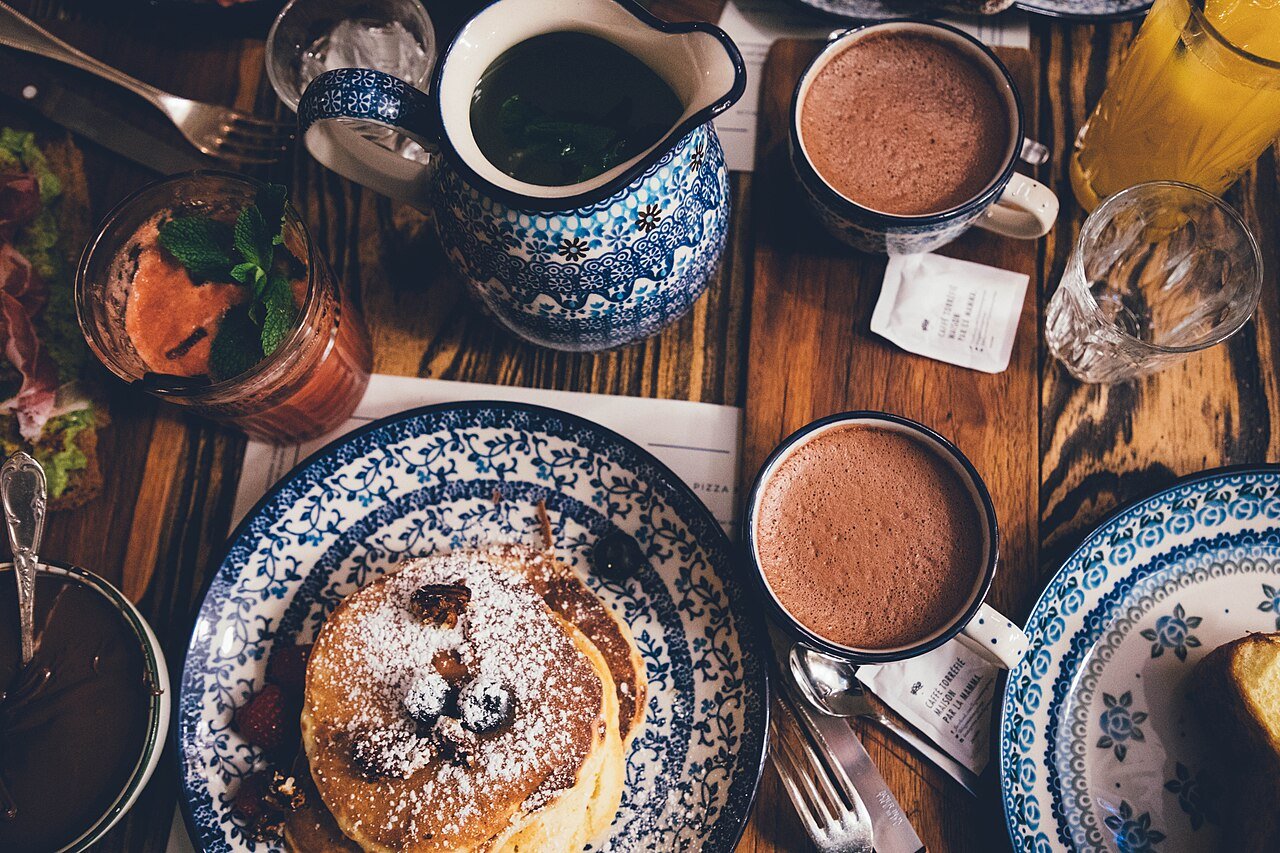
5. Buttermilk pancakes. A simple buttermilk pancake batter — flour, baking powder, sugar, salt, eggs, buttermilk, and melted butter — makes the fluffiest stack. Mix the batter the night before and store it in a pitcher in the refrigerator; in the morning, pour and cook. Serve with maple syrup, butter, and a bowl of berries. For a farmhouse touch, the no knead farmhouse bread guide covers the bread side of the same breakfast table.
6. Sheet-pan pancakes. Pour the batter into a rimmed sheet pan, scatter berries or sliced banana over the top, and bake at 425°F for 15 minutes. One pan feeds the whole table, there is no standing at the stove flipping, and the slices cut into neat squares. It is the best pancake method when the cook also wants to eat breakfast.
7. French toast bake. Cube day-old bread into a baking dish, pour over a mixture of eggs, milk, cinnamon, and vanilla, and refrigerate overnight. In the morning, bake at 350°F for 35 to 40 minutes until puffed and golden. It tastes like French toast and bakes like a casserole — no flipping, no second pan, and the whole table eats at once.
8. Cinnamon rolls from the freezer. If the freezer holds a batch of cinnamon rolls — homemade or store-bought — New Year’s morning is the time to bake them. Set them out to thaw overnight, bake in the morning, and drizzle with icing while they are warm. They fill the house with the smell of cinnamon and make the morning feel like a holiday without any extra work.
9. Yogurt and fruit bowls. Not everyone wants a heavy breakfast on January 1. Set out thick yogurt, granola, honey, and a bowl of sliced fruit — berries, banana, and orange segments — and let people build their own bowl. It takes five minutes to set up, it balances the rich dishes, and it gives the table a fresh, bright element.
Savory Sides and Breads
A brunch table needs more than eggs and pancakes. These sides fill the gaps and use ingredients most kitchens already have.
10. Crispy home fries. Dice potatoes, toss with oil, salt, and paprika, and roast at 425°F for 30 minutes, turning once. They come out crisp outside and soft inside, and they hold well in a warm oven while everything else finishes. Add diced onion and bell pepper for a fuller hash, or keep them plain for the kids.
11. Sausage and bacon platter. Cook a pound of sausage links and a pound of bacon the night before, refrigerate, and reheat in the oven in the morning while the casserole bakes. A platter of both covers the savory appetite without any morning cooking at all. Drain well and keep warm under foil.
12. Toast and jam board. A board with sliced sourdough, a loaf of quick bread, butter, and two or three jams — strawberry, apricot, and a marmalade — is the simplest thing on the table and one of the most used. The sourdough bread beginners guide is worth reading if the household bakes its own bread; a fresh loaf on January 1 is a small celebration in itself.
13. A simple green salad. It sounds out of place at brunch, but a bowl of mixed greens with a light vinaigrette, orange segments, and toasted walnuts cuts through the richness of eggs and sausage. It takes five minutes, it needs no cooking, and it makes the table look complete.
Drinks: Coffee, Juice, and Something Festive
Drinks are the part of brunch that gets forgotten until the table is already set. Plan them the night before, too.
14. A big pot of coffee and a carafe of hot chocolate. Coffee is non-negotiable on January 1, and hot chocolate is the drink that makes the kids feel included. Make the hot chocolate in a slow cooker the night before — milk, cocoa, sugar, and a pinch of salt on low — and it stays warm all morning. The hot chocolate recipes collection has five variations, from classic to spiced.
15. Orange juice and sparkling cider. A pitcher of orange juice and a bottle of sparkling cider, chilled overnight, covers both the plain and the festive options. Pour the cider into champagne flutes for a toast to the new year — it costs little and makes the morning feel like an occasion.
16. A simple brunch punch. Mix cranberry juice, orange juice, and ginger ale in a large pitcher or punch bowl, and float orange slices and a handful of cranberries on top. It is the same thinking as the christmas punch recipe, scaled down for a morning table, and it takes two minutes to assemble.
Setting the Table
A New Year’s brunch is served family-style, and the table should be set up for that.
Serve everything in the middle. Casserole dish, pancake platter, fruit bowl, bread board, and drinks all go in the center, and people help themselves. It is faster than plating, it suits a slow morning, and it lets everyone take what they actually want.
Keep the coffee and juice on a side table. Drinks are the thing people refill, so they should not block the food. A small side table or a kitchen counter with the coffee pot, the juice pitcher, and the mugs keeps the traffic away from the table.
Use what you have. New Year’s Day is not the morning for a formal table setting. Cloth napkins if they are clean, paper if they are not, and a single candle or a small vase of winter greenery in the middle. The food is the decoration.
A Simple Timeline for January 1
Put it together in one schedule and the morning runs itself.
8:00 AM — Oven on. Preheat to 350°F. Put the casserole in.
8:10 AM — Drinks and table. Start the coffee, set out the juice and the punch, put the fruit bowl and bread board on the table.
8:30 AM — Pancakes. Cook the sheet-pan pancakes or the griddle batch. Set them on the table under foil.
8:45 AM — Eggs and sides. Scramble the eggs, reheat the sausage and bacon, and put the home fries in the oven if they are not already there.
9:00 AM — Casserole out, everyone sits. Slice the casserole, pour the coffee, and toast the new year. The whole meal is on the table, and the cook is sitting down with everyone else.
📌 Pin this: Serve brunch family-style with everything in the middle of the table — people take what they want, the cook sits down too, and nothing needs plating.
FAQ: New Year’s Day Brunch
What time should New Year’s brunch start?
Late morning — 9:00 or 10:00 AM — suits most households. It gives everyone time to wake up slowly and the cook time to get the casserole in the oven without rushing.
Can everything really be made the night before?
Almost everything. The casserole, the French toast bake, the pancake batter, the deviled eggs, and the fruit can all be prepped on December 31. Only the scrambled eggs and the final pancake cooking need the morning.
How do I feed a crowd of twelve or more?
Double the casserole (use two 9×13 dishes), make sheet-pan pancakes instead of griddle pancakes, and cook the eggs as a sheet-pan batch. Family-style serving handles the rest — people take what they want and the table never needs a second round of cooking.
What about guests who do not eat eggs?
The yogurt bowls, the fruit, the toast board, and the pancakes cover a no-egg plate. A pot of oatmeal with brown sugar and raisins is a useful extra for a guest who wants something warm and simple.
Can I use leftovers from New Year’s Eve?
Yes — and it is the smartest move of the morning. Leftover ham goes into the casserole, leftover rolls become the French toast bake, and leftover fruit fills the yogurt bowls. The leftover turkey recipes approach works for any holiday: the best January 1 dish is often the one that uses up December 31.
What is the one dish I should not skip?
The overnight egg casserole. It is the only dish that cooks itself while the cook does everything else, and it is the reason the morning stays relaxed.
Conclusion
A New Year’s Day brunch is not a performance. It is the first meal of the year, eaten slowly, with the people who stayed up late the night before. The recipes that work are the ones that respect that: a casserole that bakes itself, pancakes that cook in a sheet pan, drinks that are ready before anyone asks.
Your action step this week: Pick the casserole and one sweet dish from this guide, and write the shopping list now. On December 31, assemble the casserole after dinner and mix the pancake batter in a pitcher. On January 1, put the casserole in the oven, make the coffee, and let the morning unfold. The new year starts better when the cook is sitting at the table too.